Monday, September 11, 2017

SONNET 100 CROOKED KNIFE: Where art thou Muse that thou forget'st so long


Where art thou Muse that thou forget'st so long,
To speak of that which gives thee all thy might?
Spend'st thou thy fury on some worthless song,
Darkening thy power to lend base subjects light?
Return forgetful Muse, and straight redeem,
In gentle numbers time so idly spent;
Sing to the ear that doth thy lays esteem
And gives thy pen both skill and argument.
Rise, resty Muse, my love's sweet face survey,
If Time have any wrinkle graven there;
If any, be a satire to decay,
And make Time's spoils despised every where.
   Give my love fame faster than Time wastes life,
   So thou prevent'st his scythe and crooked knife.


SONNET INDEX


Mnemonic Image: CROOKED KNIFE

Memory Passage: The CROOKED KNIFE engraving the face (castrating Time, creating Eros)

Idiosyncratic Abstract: Imagine Marlon Brando's Stanley Kowalski as the Poet. Now the famous scene where Stanley is shouting up to Stella, but instead of Stella it's the Muse. The Poet is frustrated with the Muse here, but there is also a longing. The Poet calling out in the night, after months of silence. He calls the Muse out in each of the three quatrains: Steeellaaaa, O Steeelllllaaaa! Where are you, Muse? Return, Muse! Rise up, Muse! What is remarkable is the Poet is chastising the Muse. It's not his fault. It's the silent, forgetful, indolent / resty Muse who is to blame. Return now to the Poet as Stanley imago, all muscular animal energy, hollering for the Muse, like a Beast in the jungle calling to a mate, to do her job and restore the poetic fury the the Young Man once inspired; to grant the Young Man fame quickly before Time uses his Crooked Knife to engrave even more lines upon his face or, finally, his Scythe to cut down the Young Man's life.


Couplet Imagery:  The Reawakened Muse preventing the Tyrant Time from cutting wrinkles into the face of the Young Man and taking his life with the CROOKED KNIFE and SCYTHE.


 Give my love fame faster than Time wastes life,
   So thou prevent'st his scythe and crooked knife.


Something of a race here, a hurry up now, it's time. Sand falling through the hourglass. Beauty despoiled by graven lines. Time relentlessly wasting life - in every new instant. But the Muse has the power to get ahead of this wasting clock-machine by granting fame. Just barely. Fame is a dubious proposition these days. But as always with the sonnets, we are still reading them. I am memorizing them. So there's more truth than tongue in the couplet.

Note the impersonal my love - which could be applied to the Young Man but also Shakespeare's creative act of making the sonnet as an expression of love. Also discussion over the redundancy of scythe and crooked knife (hendiadys). It doesn't bother me. I see the scythe as the tool wherein Time / Death reaps down the life. Atropos. And the Crooked Knife as the instrument that carves the trenches / lines / wrinkles into the Young Man's face.

***

Perhaps appropriate to the biography behind this portion of the sonnet sequence, I took a long break in my memorization after sonnet 99. I was frankly exhausted by the drama. The necessary repetitions involved in memorization spun off their own dreary and pathetic plot lines in my imagination, blending and folding into my own life. And so, I stepped away for a while.

From everything. Modern life is endlessly distracting. It is all too easy to simply relax, go on about your day, and watch the years go by, lulling you into a pleasant complacency. Death-in-Life. The hope is that one day you will wake back up and resume those activities that once gave your life such meaning and purpose. The reality is all of those "projects" get pushed to the back of the desk, then into the drawer, then into a box and placed in the back of the closet. With each new small betrayal, you tell yourself, someday I'll get back to this. And on those lazy Saturdays when you have nothing to do and the old ghosts come calling, you remove the box, open it up, lay it all out before you and... nothing comes. You can't quite get back on the horse. The Muse has forgotten you.

The wonder of it is your job required you to write ad copy and promotional material. For these "base subjects", you've been on fire, witty, profound, investing the blurbs and ads with a clever depth and humor. You feel as if you've been honing the blades of your knifes and keeping all your tools clean. But for the real Work, those great redemptive projects that you once believed defined your life, the tools you have been using are suddenly inadequate and serve little purpose. You've become a master of the cigarette lighter and the nail clipper when you now need a flame thrower and a machete to clear a path into the dark heart of the jungle. Bereft, you cry out for the fury of the Muse to save you from your sad amusements.

Where art thou Muse that thou forget'st so long,
To speak of that which gives thee all thy might?
Spend'st thou thy fury on some worthless song,
Darkening thy power to lend base subjects light?

Some commentators (Paterson, Wilson) get a sense there was a break, a lapse of time between 99 and 100. I am with them. I imagine the Poet and the Young Man running into each other after a long absence - longer than any previous absence in the sequence (perhaps 3 years, cf. S104). Immediately, the Poet sees the Young Man has aged. This shocks the Poet. He has carried with him an idealized ageless image of the Young Man in his memory. And now he is faced with a man who is no longer as young... or as beautiful.

We've all had this experience of not seeing a loved one, a family member or an old friend, for several years. That naked lunch moment where the older, aged, wrinkled, bald or gray haired, overweight stranger is there before you as you attempt to reconcile it with the younger image you have held in your memory all of these years. Of course, we are all in this same boat merrily rowing down this despoiling river.

Consider Shakespeare here however: he has composed 99 exquisite sonnets to the beauty of the Young Man, promising him his eternal summer shall not fade (18), challenging Time to do his worst, my love shall in my verse ever live young (19), that ’Gainst death and all-oblivious enmity he will still be praised in the eyes of all posterity / That wear this world out to the ending doom (55). It is the great theme and truth of the sonnets that they are a monument to the Young Man, a monument which still stands and is still o'er-read:

Your monument shall be my gentle verse,
Which eyes not yet created shall o'er-read,
And tongues to be your being shall rehearse,
When all the breathers of this world are dead;
   You still shall live (such virtue hath my pen) 
   Where breath most breathes, even in the mouths of men. (81)

Then one day the Poet runs into the Young Man on the street. Two former lovers, whose lives were once so tangled together, erotically, psychologically, who drifted gradually apart, with no formal "break-up" or closure, each busily preoccupied with their own lives, now on the street face-to-face after a few years.

- What? Really? Has is been that long?
Laughing and lying now.
- My God, you haven't changed a bit!
- Yes, let's get together soon! Relive the old days!
Each walking away: the Poet soaking with dread, the Young Man oblivious.

Shakespeare considers his Monument: perhaps he should let it alone, ending it at 99. But to someone so numerologically attuned, to a poet fascinated by the psychological drama, there is no way he could leave it be. In many ways, this is where it gets the most interesting. If Shakespeare has committed himself to brutally and relentlessly exploring every facet of his love for the Young Man, then he must continue on into this new landscape where Time has darkened the dawn, leeched the color from the day, and folded death's lines into every smiling face.

Note: I'm of the belief that the overall sequence (1 - 154) is representative of what Shakespeare intended and the numerical placement of particular sonnets is vital. 99 is a particularly vivid instance of this. (See also 12 for clock, 60 for minutes, 49, 63 and 81 for climacterics, 66 for the number of the beast). The number 100 marks a new beginning.

The sonnets from 100 to 126 have a distinct tenor of the Poet having awakened from Love's Dream. That's not quite it. But there is a sober and sad morning-after wisdom within them. That moment so aptly expressed by Cyril Connolly:

It is closing time in the gardens of the West and from now on an artist will be judged only by the resonance of his solitude or the quality of his despair.

(On numerology. Here lie dragons: I haven't delved deep enough into Alastair Fowler's Triumphal Forms, but Michael Schoenfelt appears to endorse it, so I it may prove useful down the line. However, as much as I was fascinated by Hank Whittemore's The Monument, as much as I wanted his schema to work out, I couldn't buy that notion that the Shakespeare was The Earl of Oxford, the Young Man was the Earl of Southampton and Queen Elizabeth was the Dark Lady. And that Oxford and Queen Elizabeth are the biological parents of Southampton. After reading The Monument, I worked hard to shoehorn many of the sonnets into his theory - but something was always just a little off. The father-son relationship gets weird, to say the least.)

Hesiod and the Muse - Gustave Moreau


Where art thou Muse that thou forget'st so long,
To speak of that which gives thee all thy might?

So it's been a while. The old fires have gone cold. The fire and passion for the Young Man have been adumbrated, shadowed. The Poet is calling upon the Muse. I see him there at his desk, pen in hand, a fresh bottle of ink, the page blank before him, listening like Rilke at Duino Castle:

"Who, if I cried out, would hear me among the hierarchies of angels?"

It's fascinating to consider that Mnemosyne, the mythic personification of memory, was the mother of the muses. Without memory, there are no muses. There is a lot that could be unpacked here in the sense that memory is a call to thinking, an inward gathering. But for the purposes of memorizing the sonnets, it's enough now, at this re-beginning, to see the Poet calling the Muse out for having forgotten for so long to speak of that which once gave it meaning.


Damion Hirst - Anatomy of an Angel - source

There is an almost Rilkean terror to the this Muse.

and even if one of them pressed me suddenly against his heart:
I would be consumed in that overwhelming existence.
For beauty is nothing but the beginning of terror, which we are still just able to endure,
and we are so awed because it serenely disdains to annihilate us.
Every angel is terrifying.

Shakespeare's second question in Q1 is critical and accusatory of the Muse, speaking of fury and darkened powers.

Spend'st thou thy fury on some worthless song,
Darkening thy power to lend base subjects light?

The Muse's fury is worth remarking here. Booth notes furor poeticus is "a standard Renaissance term for poetic inspiration" and Kerrigan adds this "a creative rather than destructive anger." The term is derived from Plato in the Ion (quoted in Paterson):

Soc. For all good poets, epic as well as lyric, compose their beautiful poems not by art, but because they are inspired and possessed. And as the Corybantian revellers when they dance are not in their right mind, so the lyric poets are not in their right mind when they are composing their beautiful strains: but when falling under the power of music and metre they are inspired and possessed; like Bacchic maidens who draw milk and honey from the rivers when they are under the influence of Dionysus but not when they are in their right mind. And the soul of the lyric poet does the same, as they themselves say; for they tell us that they bring songs from honeyed fountains, culling them out of the gardens and dells of the Muses; they, like the bees, winging their way from flower to flower. And this is true. For the poet is a light and winged and holy thing, and there is no invention in him until he has been inspired and is out of his senses, and the mind is no longer in him: when he has not attained to this state, he is powerless and is unable to utter his oracles.  - Plato, Ion - Jowett trans.

Kerrigan remarks on the darkening in L4: "burning up (like a candle which loses itself to give light: compare S1 L6)" which is Feed'st thy light's flame with self-substantial fuel. I like the connection from this S100 to S1.

Where art thou Muse that thou forget'st so long,
To speak of that which gives thee all thy might?
Spend'st thou thy fury on some worthless song,
Darkening thy power to lend base subjects light?

So in Q1, we have the Poet crying out for the Muse to remember, to bring forth into his memory, the original primal energies of the Young Man's beauty, to cease from wasting all the divine furor poeticus on worthless songs, and shining its illuminating creative radiance on unworthy subjects. The narrative for memorization flows easily:

Where are you
You forgot to speak
About that which gives you might
Spending your fury on worthless song
Darkening your power to give other subjects light

Return forgetful Muse, and straight redeem,
In gentle numbers time so idly spent;
Sing to the ear that doth thy lays esteem
And gives thy pen both skill and argument.

Now in Q2 the forgetful Muse is reiterated:

Return and redeem

The fury tamed to gentle numbers and the time that may have been wasted, idly spent, will be charged with the creative energies of the Muse to actually have been a period of fruitful meditation, a creative calm before another new storm of creativity. However, there is a sense, again, of the dying of the light. The presence of the Young Man is no longer enough to inspire the poem. The Poet is no longer so easily intoxicated - or perhaps the Young Man, having aged, is no longer as intoxicating. Booth notes Ephesians:


Take heed therefore that ye walk circumspectly, not as fools, but as wise,
Redeeming the season: for the days are evil. Ephesians 5.15-16

Sing and esteem

The lyric poets from Ion when falling under the power of music and metre they are inspired and possessed. The ear of the poet longing to be possessed by the power of the Muse, to hear the sweet song of the gods and translate it, be the receiver of the signal, and express it through the written word.

Rise, resty Muse, my love's sweet face survey,
If Time have any wrinkle graven there;
If any, be a satire to decay,
And make Time's spoils despised every where.

Q3 is helpfully alliterative with Q2:

Return forgetful Muse || Rise, resty Muse

The Poet again calling the Muse out as being indolent and lazy. In the shadow sonnet, Shakespeare is in command of the Muse, as a rider is of his horse. Get up you lazy beast! There is an almost inhuman audacity to his commanding of the Muse. An aggressive atmosphere of condescension. Ultimately, of course, this is self-criticism. The slack resolution in the couplet reflects this knowledge.

Here is the crux and occasion of the sonnet: since the Poet first saw the Young Man, Time has graven wrinkles into his beautiful face. Vendler is helpful:

Why, one wonders, has the Muse so long forgotten the friend? The only answer suggested by the sonnet is that the friend has begun to age; a wrinkle has been graven on his sweet face. Other, perhaps unwrinkled faces - base subjects - seem recently to have had a greater appeal to the speaker's Muse. If she is to return to her "worthy" subject, the young man, she will have to turn herself from a Muse of epideictic poetry in a Muse of satiric poetry, reproaching Time. The Art of Shakespeare's Sonnets. p 427

This turn illustrated in the line, If any, be a satire to decay,

I wonder what such a satire to decay would be, a satire powerful enough to make despised the effects of aging through the natural course of time? Perhaps something along the lines of the Picture of Dorian Gray?

 Give my love fame faster than Time wastes life,
   So thou prevent'st his scythe and crooked knife.

Vendler discusses the "alchemical transmutation" of the couplet:

The couplet proposes a species of alchemical transmutation of the elements of the young man, so that by the time the scythe and knife reach any part of him, it will already be all fame and no flesh. - The Art of Shakespeare's Sonnets. p 427

The bones of fame that endure while the flesh decays. 


***


In my memory practice, I often indulge in the surreal sexual-violent interpretations, which is always more memorable but often diminishes the beauty of the poem.

Here we have the aged Stanley Kowalski image of the Poet, a naked Marlon Brando, sitting in a chair holding his flaccid cock. He is worried its flaccidity and impotence with regard to that which once excited and stimulated it.

Where art thou Muse that thou forget'st so long,
To speak of that which gives thee all thy might?

The Poet is trying to get an erection. He wants to masturbate, to have one of those glorious orgasms he once had in his youth. The Muse is his cock. It no longer seems to be stimulated by the images of the Young Man.

Spend'st thou thy fury on some worthless song,
Darkening thy power to lend base subjects light?

The only images that work to get the Poet's cock hard are debased, cheapened images of beauty, slutty porn stars going through the motions. The once Ideal Beauty of the Young Man has become the mindless muscle pumped well-endowed porn star.

Return forgetful Muse, and straight redeem,
In gentle numbers time so idly spent;

The Poet is sick of all the superficiality, the artificiality of watching pornography for days on end, stroking his cock to less and less effect. Meaningless days full of weak orgasms and grey boredom. He wants his cock to once again be excited by authentic human love, to find redemption from all the time so idly spent

Sing to the ear that doth thy lays esteem
And gives thy pen both skill and argument.

He wants to experience the erotic again inside the language, to have words sung and whispered into his ear that will excite almost more than any physical stimulation. As it is, all language has been emptied of such meaning, words abused and used like an old piece of chewing gum.

Rise, resty Muse, my love's sweet face survey,
If Time have any wrinkle graven there;

The Poet strokes his cock, imploring it to Rise, look at the face of the Young Man. Remember the old days when looking into the Young Man's eyes would give an instant erection and often spontaneous orgasm. Look now at the Young Man's face. What is that has changed? Why does the face once so full of beauty and truth and the erotic no longer inspire the passion and fire?

If any, be a satire to decay,
And make Time's spoils despised every where.

And there it is: the Young Man is old. His face is creased and lined. Instead of being the embodiment of Eros, he is now the symbol of Thanatos. The Poet's cock rebels, refuses to get get hard, can find nothing erotic in the Young Man. To him, this Muse that once gave him such spiritual joy and physical pleasure is now a satire to decay. And all around him, all that was once beautiful and charged, over-charged, spilling over the brim with the erotic, has now been spoiled by Time.

   Give my love fame faster than Time wastes life,
   So thou prevent'st his scythe and crooked knife.

What remains? Only the sad and fading memory of the erotic. Stanley Kowalski sits in the dreary room, alone, holding his flaccid cock with one hand and writing the lines of this sonnet with the other. Only his empty words will endure, but his own joy and the beauty of the world are now forever fading. Time's scythe and crooked knife have effectively castrated him from his Muse.


And Heaven came, bringing on night and longing for love, and he lay about Earth spreading himself full upon her. Then the son from his ambush stretched forth his left hand and in his right took the great long sickle with jagged teeth, and swiftly lopped off his own father's members and cast them away to fall behind him. And not vainly did they fall from his hand; for all the bloody drops that gushed forth Earth received, and as the seasons moved round she bare the strong Erinyes and the great Giants with gleaming armour, holding long spears in their hands and the Nymphs whom they call Meliae all over the boundless earth. And so soon as he had cut off the members with flint and cast them from the land into the surging sea, they were swept away over the main a long time: and a white foam spread around them from the immortal flesh, and in it there grew a maiden. First she drew near holy Cythera, and from there, afterwards, she came to sea-girt Cyprus, and came forth an awful and lovely goddess, and grass grew up about her beneath her shapely feet. Her gods and men call Aphrodite, and the foam-born goddess and rich-crowned Cytherea, because she grew amid the foam, and Cytherea because she reached Cythera, and Cyprogenes because she was born in billowy Cyprus, and Philommedes because sprang from the members. And with her went Eros, and comely Desire followed her at her birth at the first and as she went into the assembly of the gods. This honour she has from the beginning, and this is the portion allotted to her amongst men and undying gods, -- the whisperings of maidens and smiles and deceits with sweet delight and love and graciousness. - Hesiod, The Theogony
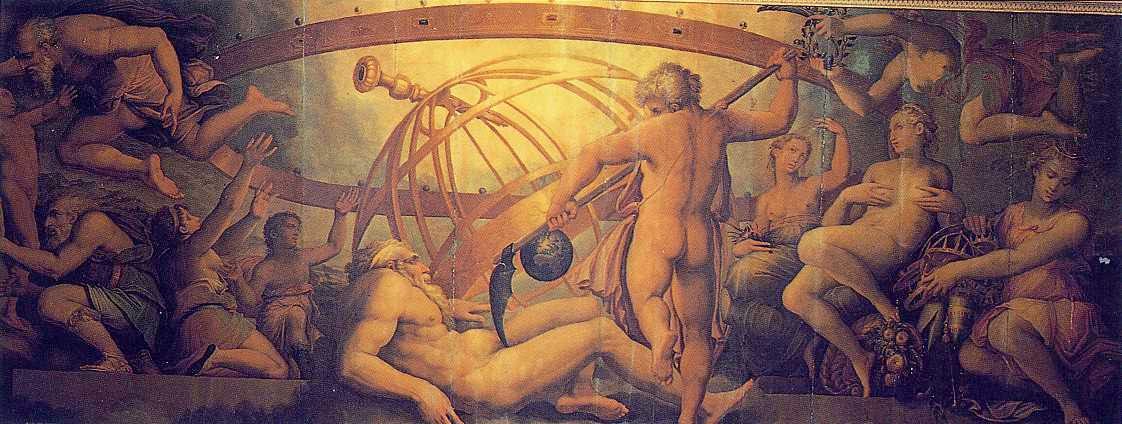


Castration of Uranus - source


Birth of Venus - Botticelli - source


Sunday, September 10, 2017

Broken sounds that once animated words long forgotten.

Stift Altenburg Veitskapelle Ossarium - source


It's been a while since I have worked on memorizing the Sonnets. Once I reached the 100th sonnet, I jumped ahead to 127, the beginning of the Dark Lady sequence, memorized a dozen or so, then cherry-picked from 100 to 127 (The "Hits": 105, 106, 107, 116, 119, 122). I was exhausted by the Young Man narrative. After the Rival Poet sequence (78 to 86), it all seemed like so much sound and fury.

It's interesting. I am currently reading Shakespeare's Sugared Sonnets by Katharine M. Wilson. She believes the sonnets to be elaborate parody, a high literary joke. She writes:

Nothing is more difficult than to prove a joke, for the only proof is to surprised into laughter by it, since unexpectedness makes one of its essential elements. By a stroke of luck I made a chronological study of the main Elizabethan sonneteers for another purpose, and was surprised into laughter when I arrived at Shakespeare. My difficulty in showing that he wrote his sonnets as a parody is that I cannot recreate this experience for others. It seems I must give the game away first. However, as those on the Dark Lady already strike many readers as unconvincing taken seriously, they may provide a good opening. They can hardly have been written to a woman in compliment, and unless one approaches them already convinced, it is difficult to believe that they could have been written about a real woman. Indeed, nothing is easier than to show they are parodies. - Shakespeare's Sugared Sonnets. p 83

It is perhaps a faint argument to wonder why, if they are indeed parodies, Shakespeare wrote so many. The Dark Lady sequence of 25 (or so) sonnets are a reasonable number to get the point of parody across. And even then, if you grant the 17 Procreation sonnets as a sophisticated game, what are you to make of the Civil War sonnets (33 to 35, 40 to 42, 57 and 58)? There is an authentic pathos, a resounding depth of human experience, that underwrites the poetry of so many of the sonnets. Something happened there. I find it difficult to write them all off as parody. Even in the Dark Lady sequence, 129 and 147 are howling cries of despair. I can almost feel Shakespeare's breath in them, his sweat and tears; there is an all too human hammering Pulse visible under their skin.

Still, there is no denying a conversation with the other sonneteers, especially Constable. Elaine Scarry's Naming Thy Name: Cross Talk in Shakespeare's Sonnets explores this relationship with a method that borders on a beautiful insanity. Constable is the Young Man in her estimation. The sonnets are a series of "answering poems" where "the two lovers spell out in full one another's names" - at times, literally in anagrams and complicated code. For many of the sonnets, there is no doubt of Constable's influence (24, 105, 106, 107, 114, 141 and the obvious oddity of 99), but there is broader conversation taking place with the entire sonnet tradition: Daniel, Davies, Sidney and Spenser to name only a few.

Love's Labors Lost presupposes cultured young men ready for the new approach, or at least for criticism of the old. There is a climate favoring a new approach to the sonnet.

This is the context in which Shakespeare wrote his sonnet sequence.To us it may seem a strange one, but if it does, this suggests something wrong in our approach. The sonnets have been misread through being studied out of context. Lacking the background that gave them meaning, we had the problem of explaining them, and so have invented such theories as that they were autobiographical, expressions of the poet's relationship with a real man, and if not written to a real woman, were at least about her. Or we may read them as self-contained reflections whose recondite expression reflects depth of experience. But this cannot have been the approach of either Shakespeare or his contemporaries. Shakespeare must have had the cadences, imagery and ideas of his predecessors in mind as he wrote. he used the same of similar tunes and the same imagery and conceits as the other sonneteers, to pay the same flattering and devoted attention, but to a man, not a woman. Apart from this he differed from them only by beginning his sonnet sequence with a section of seventeen sonnets each coming to an identical and ridiculous climax in the couplet, begging his friend to marry and that for the most fantastic of reasons, and by reserving the more vituperative outpourings of sonnet tradition for a woman. That is to say he reduced the whole thing to the absurd. - Shakespeare's Sugared Sonnets. p 82

Wilson seems to have been particularly anxious about the possibilities of Shakespeare being a homosexual and a misogynist. Whether he actually was or not is beside the point. Her thesis that the entirety of the sonnets were parody, especially the Young Man sequence, is informed by this anxiety.

Putting Shakespeare's sonnets in their literary background leaves no chink for a real man and woman. It was not till the end of the eighteenth century, after their background had been forgotten, that this possibility was suggested, as in these circumstances was bound to happen sometime. But given that background, the idea of a real man and woman being involved, becomes ridiculous. As it is, some of the situations and suggestions provided by historians who believe they have identified Shakespeare's 'friend', add humour, making perhaps the last aspect of Shakespeare's joke. - Shakespeare's Sugared Sonnets. p 355

The question is why do I read Wilson or Scarry so closely? Two reasons. First, the sonnets are a funhouse of mirrors. It is always fascinating to see how a brilliant mind - and both Wilson and Scarry have undeniable brilliance - finds its way through the labyrinth of illusion, reflection and reality. Second, it throws a more memorable light upon the sonnets, it provides more of a "mnemonic story" to enrich the meaning. If it's not sex, via innuendo or double entendre, which burns forth from between the sweet lines of the poem (But since she prick'd thee out for women's pleasure), then a secret, a hidden message, a conspiracy can be just as memorable.

Even though Sonnet 18 is one of the most well-known and most easily memorized (having to due with how present it is in the poetic landscape), I was still delighted to read in Naming Thy Name:

Then comes the final couplet: 

So long as men can breathe, or eyes can see,
So long lives this, and this gives life to thee.

The first of these two lines records the name of Henry Constable. 

So LONg as mEn CAn BReaTHe, or EYes caN see,

C  O  N  S  T  A  B  L  E     H  E  N  R  Y

The “this” in the final line—“So long lives this, and this gives life to thee”—refers to the whole sonnet, but more specifically to the antecedent line with its precious cargo. One might object that a ten-syllable line has many letters and may contain, by accident, many names. This is a reasonable objection and no doubt accidental names do reside in the line. But there are fewer names than one might suppose: Philip Sidney is not in the line, nor Edmund Spenser, nor Christopher Marlowe, nor John Donne; nor, alas, has Shakespeare accidentally recorded my own name in the line, nor the name of the first five friends who come to mind, and many of us have fewer letters in our names than Henry Constable. Furthermore, put forward here is not any line but one that announces that the beloved is, at that very moment, inside our eyes, inside our breath, and that we are, by lending the line our live percipience, keeping the beloved alive." - Naming Thy Name. loc. 113

I found this absolutely delightful - if a little wacky. But it added a depth of memorability to the line. I love the realization that whenever I recite this line - which I've recited a hundreds of times - I now hear the little whisper of "Henry Constable" inside of it.

(See Solving Shakespeare’s Sonnets: Elaine Scarry’s “Naming Thy Name” by Matthew Harrison for a nice critique.)

Helen Vendler is more problematic. Her anagramatic exposures are rooted deeper in the language. She is more of a poetic anatomist, confining her explorations to the realm of the poem, and not inclined to reach into the more nebulous realms of over-arching theory. Referring to her notions of the Key Word, she writes:

Absurd though such principles of composition may seem to nonpoetic eyes, poets find them appealing (as such forms as sestinas and pantoums bear witness). The Art of Shakespeare's Sonnets. p 75

And, regarding Sonnet 7:

There are some odd words in the poem - among them fore duteous and tract - which beg for explanation. It becomes evident, as one reads the sonnets, that as Shakespeare begins to follow out a given verbal scheme, the constraints on language grow as the sonnet in question progresses to its end. Nothing in the requirements of meaning or sound alone would have prevented Shakespeare from writing:

The eyes [once] duteous now converted are
From his low [path] and look another way.

Neither fore nor tract can be explained by semantic, alliterative, or phonetic needs. At the risk of seeming overingenious, I can only suggest that the golden sun generates through the sonnet, French puns on or: orient, adore, mortal, and - our point of origin - fore; and that the central image of the sun's car generates anagrammatically scrambled cars elsewhere: in gracious, sacred, and - our point of origin - tract. The aging of the sun in the poems seems to generate homage, age, golden pilgrimmage, and (once again) age; and the long (to the reader, intolerable) suppression of the word sun of course makes the word son, when it finally leaps off the page as the closing word, entirely inevitable.  - The Art of Shakespeare's Sonnets. p 76


Now this is also insanely brilliant - no less so than Scarry. With Vendler's analysis, I often get a sense of being in the proto-linguistic cauldron of Shakespeare's mind. She probes into the morpheme and phonemes of his language in a way that I cannot imagine he was conscious of. Who knows? Perhaps he was. This is Shakespeare after all: he practically invented the English Language. As Bloom would have it: he invented us.

Nevertheless, Vendler's anatomizing is not as helpful to me mnemonically. If the sonnet is the forest and each word are the trees, I find it distracting to examine each leaf, turning them over and inside-out. However, it is fascinating to follow her down into the basements of the sonnets: roots and fertile unconscious earth, half-formed creations in mason jars and piles of broken sounds that once animated words long forgotten.

All of this as preface to my returning to the Memory Work.


SONNET 6 HAND: Then let not Winter's ragged hand deface


Then let not Winter's ragged hand deface
In thee thy summer ere thou be distilled:
Make sweet some vial; treasure thou some place
With beauty's treasure, ere it be self-killed.
That use is not forbidden usury,
Which happies those that pay the willing loan;
That's for thyself to breed another thee,
Or ten times happier, be it ten for one;
Ten times thyself were happier than thou art,
If ten of thine ten times refigur'd thee:
Then what could Death do, if thou shouldst depart,
Leaving thee living in posterity?
    Be not self-willed, for thou art much too fair,
    To be Death's conquest and make worms thine heir.


SONNET INDEX


Mnemonic Image: Winter's ragged HAND

Memory Passage: Beauty's ROSE in a World War I TRENCH is reflected in a GLASS also showing the face of the EXECUTOR, Death, who admires the FRAME of Bone which holds the mirror, reaches out a ragged HAND


Idiosyncratic Abstract: The Wragged HAND of Death masturbating the Young Man while he gazes upon his portrait. Worms ooze one after another from the Young Man's cock as he ejaculates over and over onto the sterile ground.


Couplet Imagery: Narcissus self-willed, still fixed on his image in the mirror, while Death shadows over him and ravenous worms wait beneath him inherit his tasty flesh.

Be not self-willed, for thou art much too fair,
    To be Death's conquest and make worms thine heir.

Self-willed, all light quibbles aside, is for the Young Man to continue in his Narcissistic practices. Again, Shakespeare is using his beauty as the carrot, with the implied duty to the world. The Young Man is so beautiful, fair, that he owes the world the legacy beauty. All clear. These themes we already know well. In addition to beguiling to world of his beauty, being self-willed will also make him Death's conquest where his only legacy will be to worms. But note the use of self-willed. 

Sonnet 6 picks up right where 5 left off:

But flow'rs distilled, though they with winter meet,
   Leese but their show; their substance still lives sweet.

Shakespeare implores the Young Man, if he has understood the meaning of Sonnet 5,

Then let not Winter's ragged hand deface 
In thee thy summer ere thou be distilled:

Old Man Winter / Time hasn't gone anywhere and with his ragged hand is ready and waiting to deface, scar, reshape, line and wrinkle the Young Man's summer beauty before it is distilled. Remark, again, the striking of the note of the face, the face of summery beauty wherein the gaze of the other dwells. (Shadow image of the persona as a mask.)

Make sweet some vial; treasure thou some place
With beauty's treasure, ere it be self-killed. 

Finally, here is the answer to Sonnet 5: put your essence into a vial, your treasure, your seed, your semen, your genetic legacy, beauty's treasure, put it into some place where it can be used. Where Beauty will linger on to still have effect. Don't waste your treasure / semen but put it in some sweet place / womb where it will increase. All before it is self-killed. Note alliance with self-willed.

Booth comments casually over the "incidental wit" of  make sweet some vile, something vile. Regardless of intentionality or the absence thereof, it provides a useful mnemonic image: the homosexual Shakespeare secreting in his distaste of the vagina. Such striking images - regardless of their truth, strike deeply into the memory.

The lines, treasure thou some place with beauty's treasure, is evocative, conjuring up chthonian caves, reminding me a passage from Camille Paglia's Sexual Personae:

Women's body is a secret, sacred space. It is a temenos or ritual precinct, a Greek word I adopt for the discussion of art. In the marked-off space of a woman's body, nature operates at its darkest and most mechanical. Every woman is a priestess guarding the temenos of daemonic mysteries. Virginity is categorically different for the sexes. A boy becoming a man quests for experience. The penis is like eye or hand, an extension of self reaching outward. But a girl is a sealed vessel that must be broken into by force. The female body is the prototype of all sacred spaces from cave shrine to temple and church. - Sexual Personae. p 23

Thracian sanctuary the Womb Cave - source
Gupteshwar Cave,  Shiva Linga - source

The treasure cavern under the ruins of Xal Jarka. - source

Ellora Caves - source

Animation of sperm swimming to egg in uterus - source

Portal Chartres Cathedral - source


That use is not forbidden usury, 
Which happies those that pay the willing loan;

Now in Q2 we are back in the Pawn Shop, where usury is loaning out money at an exorbitantly high rate of interest. But in the case of the Young Man's treasure, the loan of his semen to the womb to create a child is an happy investment of his beauty's treasure. As the child or more children will continue to increase the Young Man's Beauty's treasure, the loan is happily paid, even ten for one.


That's for thyself to breed another thee,
Or ten times happier, be it ten for one;

The more investments the Young Man makes in the breeding of his children, the more he increases fair creatures and himself, and the happier he shall be.

Ten times thyself were happier than thou art,
If ten of thine ten times refigur'd thee:

What would normally be a horrible burden of debt, multiplying on itself, is here the source of wealth.

Then what could Death do, if thou shouldst depart,
Leaving thee living in posterity?

Because in the end, the war is with Death. Death is the collector. And the more times the Young Man has re-figured his beautiful self, the more power he has over death.

Booth has interesting commentary regarding Leaving thee living which offers helpful mnemonic imagery: leaving in a botanical sense resonates with the line from S.5: lusty leaves quite gone and the defacement of summer by the fall at the beginning of this sonnet. It also references the mathematical acrobatics of Q2 and Q3, a sum subtracted leaves a remainder. And most to the point, the Young Man leaves heirs to whom his beauty / wealth is bequeathed.

    Be not self-willed, for thou art much too fair,
    To be Death's conquest and make worms thine heir.

So turn away from being self-willed, enchanted by your own reflection, dream, for Death stands ready to conquer you and the only inheritors of your sweet flesh will be worms.

Booth and others have commented on the sexual undertones of the couplet: self-willed being masturbation and conquest in a sexual sense. There is the always prurient interpretation: stop masturbating and loving only yourself, you are too beautiful to have only Death as a lover and to allow his worms to penetrate your flesh and devour you.

An image here of Death fucking the Young Man in the ass and ejaculating worms into him. The Dance of Death, the petit mort.


“What the worm was to the corpse, his sins would be to the painted image on the canvas. They would mar its beauty, and eat away its grace. they would defile it, and make it shameful. And yet the thing would still live on. It would be always alive.” - Oscar Wilde, Dorian Gray


SONNET INDEX


Sunday, April 23, 2017

SONNET 5 FRAME: Those hours, that with gentle work did frame


Those hours, that with gentle work did frame
The lovely gaze where every eye doth dwell
Will play the tyrants to the very same
And that unfair which fairly doth excel;
For never-resting time leads summer on
To hideous winter, and confounds him there,
Sap checked with frost, and lusty leaves quite gone,
Beauty o'ersnowed and bareness every where.
Then were not summer's distillation left,
A liquid pris'ner pent in walls of glass,
Beauty's effect with beauty were bereft,
Nor it, nor no remembrance what it was:
   But flow'rs distilled, though they with winter meet,
   Leese but their show; their substance still lives sweet.


SONNET INDEX


This sonnet and the following are a pair and it's easier to think of them as one extended sonnet theme.


Mnemonic Image: Death, the FRAME of Bone

Memory Passage: Beauty's ROSE in a World War I TRENCH is reflected in a GLASS also showing the face of the EXECUTOR, Death, who admires the FRAME of Bone which holds the mirror


Idiosyncratic Abstract: The FRAME of Bone which holds the MIRROR wherein Narcissus sees his own face as Death. At the top of the FRAME, inset into the polished bone is a crystal vial filled with the the Young Man's semen.


Couplet Imagery: A glass vial of the essential substance of the Young Man and the tyrant figure of Old Man Winter.


A glass vial containing the essential substance, oil, fragrance, of the flower which has died. Prurient images of the vial containing semen, referenced in Sonnet 6, and of the woman's uterus as the vial wherein the Young Man's sperm is "distilled" into a child.


 But flow'rs distilled, though they with winter meet,
   Leese but their show; their substance still lives sweet.


The distillation of a flower is its fragrance. And while the flower itself withers, fades and dies as its season passes, the distilled fragrance, the substance, can be captured and kept within the walls of glass.


The process, not remarked upon by Shakespeare, is enfleurage. And because this metaphor is abundant in the the sonnets, explicit and implicit, it is worthwhile to get a sense of it for mnemonic reference. Keep in mind Beauty's Rose as an emblem for the Young Man. There is apt resonance between the process of distilling the fragrance of the flower and capturing the essence of the Young Man.


http://journal.illuminatedperfume.com/2012/03/jasmine-enfleurage.html


Many flowers are too fragile to sustain steam distillation. This includes many of my favorites: wisteria, lilac, lily of the valley, gardenia, jasmine, honeysuckle. The method used to capture the scent of these flowers is called enfleurage, a term much too pretty for the method itself.

In its most developed form, as practiced in Grasse, the perfume center of France, during the nineteenth century, fresh flower petals are placed on panes of glass which are smeared with purified fat. The fat absorbs the odors of the flowers, which are replenished when they are spent, until the fat is thoroughly imbued with fragrance. Then the scented fat, which is called a pomade, is washed with alcohol which absorbs the scent. The leftover scented fat was often used to make soap. The scented alcohol is called an absolute. If the alcohol is allowed to evaporate, what is left is an essential oil.

http://www.livinginseason.com/naturalworld/perfume-and-flowers/


http://journal.illuminatedperfume.com/2012/03/jasmine-enfleurage.html


Many of the industry’s most delicate and expensive flowers cannot be treated in this manner. It is a process reserved for twigs woods leaves and other hardier parts of plant life. A few flowers are exceptions: the rose orange blossom and ylang ylang are steam-distilled.  However most  flower oils are too easily  altered  under high temperature to withstand such drastic treatment and their great values justify more expensive operating methods.

One of these more expensive methods is known as "enfleurage." It is a process that has undergone little change in the past few centuries and its method of operation is out of keeping with the picture of modem civilization and the tempo of present-day life. 

Even the language of enfleurage is untranslatable into our tongue so linked is the process with the French producers. It has been described in English as “cold extraction with fat” and translated by some as “inflorescence,” a term that has not been assimilated into our language.

It is an amazing thing about the enfleurage process that more oil is obtained from a flower than was present  in  the  flower.  In  1897, Jacques  Passy,  noting this phenomenon offered an explanation. These flowers, he wrote, "do not contain their perfume all formed or contain only an insignificant quantity of it the flower produces it and exhales it in a continuous fashion." Enfleurage is possible, the author continued, because this process respects the life of the flower.”

After the flowers are picked in the fields they are brought to the nearby factories, where within a few hours they are placed by hand on layers of fats made up primarily of a highly refined lard. These fats are laid out on both sides of a framed glass known as the chassis (pronounced shahsee) where the petals remain for about twenty-four hours. The fats are known as the corps (pronounced core). During this period the flowers continue to manufacture and exhale their perfume and the absorbent fats capture and hold the oils. The chassis are placed on top of one another so that the perfume cannot escape and be lost in the air.


https://annadannfelt.com/tag/enfleurage/


After a day the chassis is shaken so that the petals fall off and those that do not come off easily are picked by hand and on the over side a new group of petals is placed.

What a painstaking process for these days of mass production and laborsaving devices! Each petal to be placed on the fat by hand and many taken off by hand with special care that it is in sufficient contact with the corps to permit ready absorption and sufficiently loose to be taken off without having more than a negligible amount of the fats cling to it.

The same corps is used over and over again for several weeks, and when it is saturated with the perfume oil it is removed. It is heated up slightly melted and then frozen into a uniform semisolid body a waxy substance called a “pomade.”

Once these pomades were used directly in perfumery. They had a slight scent of fats, which was more than overcome by the powerful concentration of the fragrant perfume. But latter-day perfumery found these pomades difficult to handle and preferred to make an extraction with alcohol. The alcohol is agitated in the pomade and the perfume dissolved in the alcohol finally passing completely from the fats.

From these alcoholic washings there is obtained the “lavage de pomade,” or pomade washings, which are alcoholic solutions of the flower oil obtained by enfleurage. It is not difficult to remove the alcohol and leave a pure flower oil. This is accomplished by a process known a “vacuum distillation,” generally referred to by its Latin term, “distillation in vacuo.”

The principle of vacuum distillation is not unlike that of steam distillation, but the method of arriving at the same end differs. When the atmospheric pressure is reduced by the creation of a partial vacuum, it requires only moderate heat to overcome the small partial pressure remaining inside the still. When the amount of pressure approaches zero, but never reaches it, we have what is almost a complete vacuum and many substances evaporate at very low temperatures. Thus, vacuum distillation avoids heating an oil up to a temperature that would be deleterious to its quality.

By vacuum distillation the alcohol is removed and the oil remains. This oil is called the "absolute of enfleurage,” or the “absolute of pomade,” although the term “absolute,” by itself when applied to flower oils is generally not used in reference to the enfleurage process.

Enfleurage is today in use primarily for two flowers, jasmin and tuberose, and for it only the most perfect flowers are employed. If the flower has been left standing too long or if it has been bruised in the picking it may undergo a putrefying process while on the chassis and adversely affect the odor of the oils.

The petals that have been picked and already used for enfleurage are not thrown away. They still have some perfume oils which had not been absorbed by the lard and they also contain waxy material of definite perfume value. These partially exhausted flowers are subjected to extraction with volatile solvents a process which we shall describe presently and the oils obtained are known by the name of "chassis" if the flower is jasmin this oil is called “jasmin chassis.”

The enfleurage process is delicate. It is associated with carefully guarded secrets and techniques belonging to each house. The absolute of enfleurage of one particular brand has a special character of its own and in order to guard that typical note the big producers grow their own flowers on plantations owned by the factories. From the fertilization to the harvesting, they can control every stage of the production of the flower and the oil.


The absolute of enfleurage strongly resembles the odor of the living flower but is not an exact duplication of it. By some perfumers it is treasured as the ne plus ultra of the essential-oil industry. Rooted as it is in tradition, with methods originating centuries back, with its secrets passed down by word of mouth and kept within a family, with little literature and less research this process gives font an oil that wins the admiration of users the world over. [emphasis mine]

- The Science and Art of Perfumery By Edward Sagarin


Vintage Perfume Bottle


So where are we? Using the couplet as the Image Key, we have,

 But flow'rs distilled, though they with winter meet,
   Leese but their show; their substance still lives sweet.


We have unpacked flowers distilled. Now they meet with Winter.  A manifestation of time, Old Man Winter and Old Man Time are hand in hand. Both are tyrants, cruel rulers who subject all to their power.

But even though the Young Man will be meet with the tyrant Winter, his substance can endure. if Beauty's Rose is distilled into a fragrance which can be transferred to another container.

Time Smoking a Picture, Hogarth
http://www.laphamsquarterly.org/time/art/time-time-smoking-picture

Father Time


Now, on to the first Quatrain.

Those hours, that with gentle work did frame
The lovely gaze where every eye doth dwell

From the first two words, those hours, Time is immediately present. The image of Father Time as a painter painting or a sculptor in flesh shaping, framing the Beauty of the Young Man's face. The Face of Beauty where every eye desires to make as its home, to linger there, dwell within.

Will play the tyrants to the very same
And that unfair which fairly doth excel;

Now enter the Tyrant, the cruel ruler who subjects all to his power. And that Tyrant is Time here making his first entrance onto the stage of the sonnets. Those hours Father Time spent in sculpting the beautiful face, he will now continue to carve and line, relentless in his inhuman artistry, defacing the face of the Young Man. These themes will sound again and again throughout the sonnets. It's vital to get a strong visual image of this Figure of the Tyrant Father Time who stands hand in hand with his twin brother, Death.

For never-resting time leads summer on
To hideous winter, and confounds him there,

Father Time as relentless, always stepping onwards, each step an instant, a second, moment. Time never stops. And this image of Time leading Summer, as a Father would lead a child, into hideous winter. What hideous? Etymological seeds of disgust, the repulsive, the horror, along with tones of fear and dread. Monstrous in what it reveals, demonstrates. How Father Time will ruin and make us all hideous. But also here: confounded. Following Kerrigan, a toppling together, destructive confusion. I see the Young Man being led forth by Time, pulled along out of summer into this hideous reality of winter, pulled along at an ever increasing pace, running, until he tumbles and falls into a heap, an old man incapable of keeping up, collapsing upon the way. Suddenly, without any warning it seems, he is a heap of bones and old weak flesh, shaking and shivering, confounded upon the path. Time not letting go, dragging his collapsed frame through the dust, ever onward into annihilation.

Sap checked with frost, and lusty leaves quite gone,
Beauty o'ersnowed and bareness every where.

In a jump cut metaphor shift, now the Young Man in Summer / Old Man in Winter finds analogue in the tree, his blood / semen is sap, cold now and unflowing, his lusty leaves, green and unfurled, his full head of hair, his proud erect full and leafy branches now bare, quite gone, and, what is one of the most beautiful lines in the sonnets:

Beauty o'ersnowed and bareness every where.

Snow as a soft blanket of insidious forgetfulness, falling softly, faintly falling. I cannot help but hear Joyce in that last passage from The Dead:

“A few light taps upon the pane made him turn to the window. It had begun to snow again. He watched sleepily the flakes, silver and dark, falling obliquely against the lamplight. The time had come for him to set out on his journey westward. Yes, the newspapers were right: snow was general all over Ireland. It was falling on every part of the dark central plain, on the treeless hills, falling softly upon the Bog of Allen and, farther westward, softly falling into the dark mutinous Shannon waves. It was falling, too, upon every part of the lonely churchyard on the hill where Michael Furey lay buried. It lay thickly drifted on the crooked crosses and headstones, on the spears of the little gate, on the barren thorns. His soul swooned slowly as he heard the snow falling faintly through the universe and faintly falling, like the descent of their last end, upon all the living and the dead.”

Beauty oversnowed. Bareness everywhere. There is also something of the lines from Longfellow's Dante, Paradiso 33:

Even thus the snow is in the sun unsealed, 
Even thus upon the wind in the light leaves 
Were the soothsayings of the Sibyl lost.

So Q1 sets up the Face of Beauty which Father Time shaped and will tyrannically deface. And Q2 has Father Time leading (beguiling) the vibrant summer green leafy lusty sap oozing phallic tree of the Young Man into a hideous winter where he becomes a befuddled confounded bald impotent barren bare snow covered Old Repulsive Creature.

Q3 comes offers salvation,

Then were not summer's distillation left,
A liquid pris'ner pent in walls of glass,

Distillation. A refinement. The process by which the very essence of a thing is captured and made independent from it's existence. Summer's distillation, the lusty sap oozing over every labial leaf, is collected like a bee harvesting nectar to be distilled and then captured in in a glass container. Note the subtle critical tone in prisoner. As if Shakespeare already has in mind a more appropriate use for the distillation of the Young Man's beauty. Perhaps instead of squirting it into an uneared womb, it might find a more enduring aesthetic birth in a more lasting creation, the Word. Later sonnets will amplify this nascent theme.

Also, via Kerrigan et al. the influence of the passage from Sydney's Arcadia is instructive for refining mnemonic imagery:

Have you ever seen a pure rose-water kept in a crystal glass ? How fine it looks, how sweet it smells while that beautiful glass imprisons it ? Break the prison ; and let the water take its own course, doth it not embrace dust, and lose all its former sweetness and fairness ? Truly so are we, if we have not the stay, rather than the restraint of crystalline marriage. 

The final two lines of Q3 need some unpacking,

Beauty's effect with beauty were bereft,
Nor it, nor no remembrance what it was:

Summer's distillation, the Rose essence of the Young Man's beauty, is captured and confined (note echo with the tumbled heap of confound above) in an elegant container, walls glassine, crystalline, uterine. But if this distillation of essence, seed, semen, is NOT captured by such walls, then Beauty's effect, the distillation, is lost, removed, taken away (Booth). If such as loss occurs, no one will remember what the Beauty once was. Think of how difficult it is to remember the smell, fragrance of someone you love who died. But then you open a trunk full of their old clothes and this unique and instantly identifiable essence of them rises up like a perfect ghost. If you could only bottle that, how happy would you be?

When I was younger, I lost my dog, Mookie. He used to sleep on this one afghan style blanket. It was soaked with his scent. I would lay in my room with my head buried in Mookie's blanket, crying in grief. Finally, my mother couldn't stand it anymore. When I was gone, she took the blanket and washed it. At first, I would not forgive her. But sure enough, it broke the spell of grief.

Not long ago, my mother died. I found a red coat she used to wear and it was just the same as that blanket, redolent of her. Wearing it, inhaling her essence, was heartbreaking and immensely comforting. I still have the coat but the distillation of her that imbued it has faded to the faintest of hints, a teasing of the memory at times. How I wish I had that distillation, that particular perfume that was her being. But what profound suffering and unrelenting ache of being would fill my heart and soul every time I opened that bottle? Eliot was right:

And the lotus rose, quietly, quietly,
The surface glittered out of heart of light,
And they were behind us, reflected in the pool.
Then a cloud passed, and the pool was empty.
Go, said the bird, for the leaves were full of children,
Hidden excitedly, containing laughter.
Go, go, go, said the bird: human kind
Cannot bear very much reality.

It's a common observation Sonnet 5 is best understood as half of a developed theme. It's as if Shakespeare was thinking about Sydney's fine Arcadia image of the rose-water in the crystal glass, tying it back to Beauty's Rose, about developing the breeding / procreation argument. This Tyrant Time starts off, the seasonal metaphor of Summer and Winter, the stark image of oversnowed Beauty and bareness everywhere. What can lead us out of this Waste Land? Ah, Sydney! The essence of the Rose is distilled into a crystal prison, whereby it might be liberated from the transient existence, freed from Time and seasons and being oversnowed. But it is problematic on it's own. I imagine the Young Man reading this and wondering what he is supposed to do? How is he to distill himself? The notion of being confined to a crystal prison is not encouraging. How can he rescue Beauty's Effect? How he be remembered?

Sonnet 6 offers solutions.

Vendler points out 5 as being a rare impersonal sonnet, similar to the scathing 129. Perhaps. I am inclined to simply view it as the working through of a more generalized theme, setting up the extremely personal pronouns in Sonnet 6: put your semen into a womb!  The Young Man would have undoubtedly understood the personal gist. I will allow that since Shakespeare's art encloses my slight understanding in its vast circumference, I am always fated to inductive surmises. Clearly, whenever he employs the distancing language of economics or imports legal terminology, you get a sense he is protecting himself or, rather obscuring, his intention. The prisoner reference, imported from Sydney, especially in light of the later sonnets, carries with it a certain agenda. Is Shakespeare so transparent as to move into the impersonal, abstaining from all pronouns, when he senses his feelings for the Young Man are growing stronger? I doubt it. Nevertheless, these are all helpful mnemonic textures to place the sonnet in deeper waters.


Time and time again. Time and time again.

SONNET INDEX


Metonymic diapasons of symphonic linguistic dimensions


The Veteran in a New Field, Winslow Homer, 1865

Painted soon after General Robert E. Lee’s surrender on April 9, 1865, and President Abraham Lincoln’s assassination five days later, Homer’s canvas depicts an emblematic farmer, revealed to be a Union veteran as well by his discarded jacket and canteen at the lower right. His old-fashioned scythe evokes the Grim Reaper, recalling the war’s harvest of death and expressing grief at Lincoln’s murder. A redemptive feature is the bountiful wheat—a northern crop—which could connote the Union’s victory. Referring to death and life, Homer’s iconic composition offers a powerful meditation on America’s sacrifices and its potential for recovery.


After so many years, there is an amusing hope that amidst the chaos and everydayness, there has been a practice, perhaps a martial art grounded in everyday acts. Wax on. Wax off. Painting. Mopping. Sweeping. It's tempting to trivialize in a pop-cultural irrelevance. What is important is an intentional practice. A set of rituals performed only for one's self, with no apparent reward or public acknowledgment, acts carried out in private as it were. The practice is it's own reward, hearkening back to the play behavior of children. To be rewarded or even praised for play ruins it, short circuits the autistic feedback loop via the gaze of the other. Once you know an other is watching you practice, you become self-conscious, and lose the natural grace and flow of what you always do when no one else is around.

So memory. Intentional memorization. I learned early on, no one - very few - wants to hear a poem recited to them, especially one of Shakespeare's sonnets. On the few occasions where someone called upon me to recite, I was immediately self-conscious and often fumbled the recitation. A poem I had perfectly recited to myself a thousand times now clumsy in my mouth.

Initially, these failures concerned me as being symptomatic of a neurological decline. But I quickly realized as soon as I was alone, the poem was there intact and beautiful, flowing from my heart to my mouth with perfect ease, as natural as breathing.

For years now, I have engaged in this practice of memorization. Memorization towards no end... at least, such has always been my assumption. However, it has been changing me, shaping my mind, my thoughts, my language in subtle ways. The heartbeat of iambs float more often through my prose these days than they once did before. Analogies of heart and eye, of shadow and dream, of death and time are more magnetic in my mind. Particular words such as "slouching," "buckle," "pluck," "ghastly," "dominion" (and so many more) now ring with deeper resonance, metonymic diapasons of symphonic linguistic dimensions. Rising cumulonimbus thunderheads in my mind.

As I return to the practice of writing after so many years away, I am aware of this unconscious training. All the years spent reciting, working to memorize poetry and prose, have disciplined muscle and nerve, attuned the ear, allowing me to narrow the chasm that once existed for me between my thought and expression. What will come of this, I know not. However, the feeling of my mental muscles grasping and wrestling with the language is one of the healthiest feelings I've had in a long while.

Tuesday, April 18, 2017

SONNET 4 EXECUTOR: Unthrifty loveliness, why dost thou spend


https://de.wikipedia.org/wiki/Datei:Kloster_F%C3%BCrstenfeld_Heilige_Hyacinthus.JPG


Unthrifty loveliness, why dost thou spend
Upon thy self thy beauty's legacy?
Nature's bequest gives nothing, but doth lend,
And being frank she lends to those are free:
Then, beauteous niggard, why dost thou abuse
The bounteous largess given thee to give?
Profitless usurer, why dost thou use
So great a sum of sums, yet canst not live?
For having traffic with thy self alone,
Thou of thy self thy sweet self dost deceive:
Then how when nature calls thee to be gone,
What acceptable audit canst thou leave?
   Thy unused beauty must be tombed with thee,
   Which, used, lives th' executor to be.


SONNET INDEX


Mnemonic Image: Death, the EXECUTOR

Memory Passage: Beauty's ROSE in a World War I TRENCH is reflected in a GLASS also showing the face of the EXECUTOR, Death


Idiosyncratic Abstract: The Reliquary of St. Death full of Hyacinth Seeds is bequeathed to the Executor


Couplet Imagery: Unused Beauty in a Tomb, Used Beauty in an Executor

Thy unused beauty must be tombed with thee,
   Which, used, lives th' executor to be.

What is the image of "unused beauty"? Again, the metaphor of the container and that which it contains. Imagine the reliquary of a saint, but instead of a finger bone, tooth or lock of hair, there are seeds. If kept unused, they end up in a sterile tomb, drying out, crumbling to dust, and leave no inheritance to the world.

If the seeds are used, planted in an "uneared womb," the beauty can be nurtured and cultivated into a new plant / child / being, which will assume the duties and responsibilities of the Young Man's estate - his legacy - which is Beauty. This living Executor distributes the wealth of the Young Man's Beauty to future generations.


Crypt Relic of St. Blaise Late 17th century

Saint Blaise (Croatian: Sveti Vlaho or Sveti Blaž) is the patron saint of the city of Dubrovnik and formerly the protector of the independent Republic of Ragusa. At Dubrovnik his feast is celebrated yearly on 3 February, when relics of the saint, his head, a bit of bone from his throat, his right hand and his left, are paraded in reliquaries. - Wikipedia


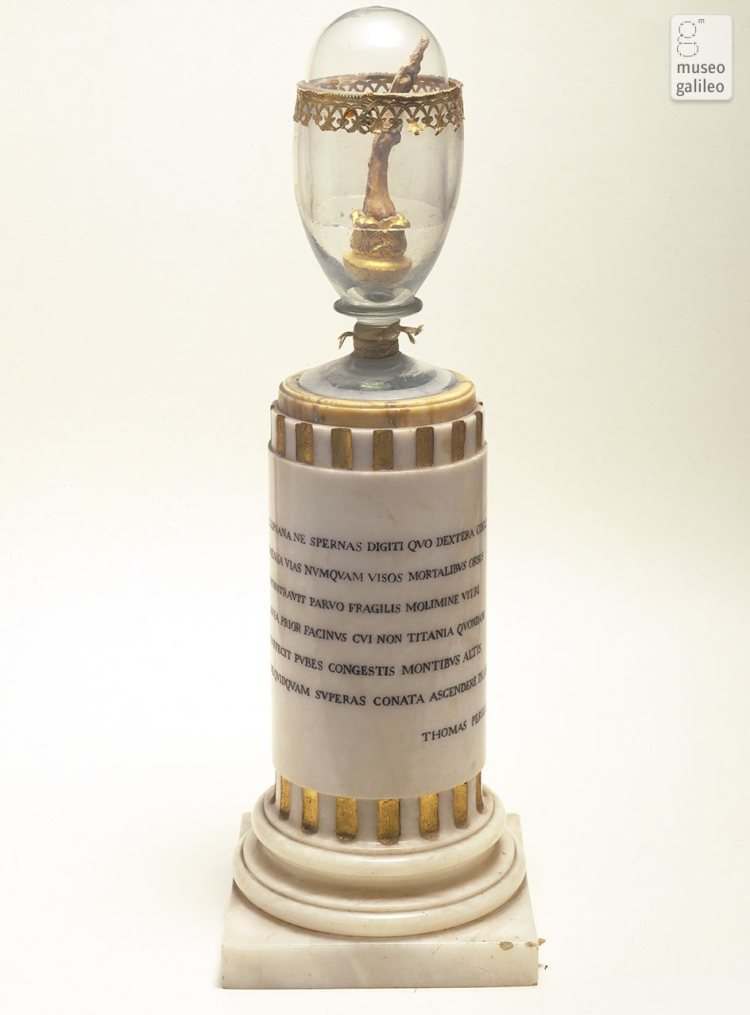
Middle finger of Galileo's right hand

This item exemplifies the celebration of Galileo as a hero and martyr of science. The finger was detached from the body by Anton Francesco Gori on March 12, 1737, when Galileo's remains were moved from the original grave to the monumental tomb built on the initiative of Vincenzo Viviani. 


Reliquary of Mary Magdalene

The relic, enclosed in rock crystal, is said to be Mary Magdalene's tooth.

So the mnemonic image is of the Young Man as a lovely Reliquary of Beauty filled with hot white seeds - semen. That reliquaries are used to contain Holy Fragments of a Saint after their death works well to underscore the urgency of passing on his beauty to future generations.


Notes 4/18/2017


Unthrifty loveliness, why dost thou spend
Upon thy self thy beauty's legacy?

Right off the bat, the distancing language of economy. The Young Man "loveliness" is unthrifty - echoing the "thriftless" praise from Son. 2. He is spending his seed unwisely, in an unfruitful manner, making investments - if any - that will not pay any dividend, have no return. And what is he spending his wealth - treasure - upon? Himself. Again, Narcissus. And the prurient image of the Young Man ejaculating upon himself, wasting his seed.

Nature's bequest gives nothing, but doth lend,
And being frank she lends to those are free:

Bequest reinforces the legacy, a will which stipulates how an individual's legacy is to be given to others. It's helpful here to imagine the Young Man as the Miser and Nature as the Generous Mother who gives generously but with certain conditions: that her gifts must be passed on to future generations after the death of the one given to, not hoarded and taken to the grave.

Then, beauteous niggard, why dost thou abuse
The bounteous largess given thee to give?

The overabundant Beauty of the Young Man was a bountiful gift given to him by Nature. Not to keep to himself and hoard, niggard, but to also give to others. The masturbatory undernotes resonate here in "abuse the bounteous largess." He isn't using his seed, he's abusing it - and himself - in selfish acts of Onanism. (Note: A gift that cannot be given away ceases to be a gift. The spirit of a gift is kept alive by its constant donation.  - Lewis Hyde)

Profitless usurer, why dost thou use
So great a sum of sums, yet canst not live?

The userer is always the image of the pawnshop owner for me, the rapacious one who preys on the hardships of others, taking in their property as collateral at a small fraction of its actual value and loaning them money at an exorbitant rate of interest. The Userer is always at the advantage, he always stands to make a profit. So if the Young Man is a profitless usurser, he has accepted something of great value without realizing it. He has in his possession great wealth - sum of sums - but is not able to survive - in himself and by extending his blood legacy.

For having traffic with thy self alone,
Thou of thy self thy sweet self dost deceive:

Contra Kerrigan and Pro Booth, I always see this line as referencing masturbation. Mnemonically, it fits with the visual of the Young Man spending his seed upon himself in Q1. He's not having sex with anyone. Also nuanced echo from Son. 2: "Or who is he so fond will be the tomb / Of his self-love, to stop posterity?" This self-eroticizing Narcissus, masturbating to the reflection of his own image in his mind or the mirror is betraying / deceiving this self - the Self that is contained in the shell of the body - by not insuring this it will survive beyond his individual ego-ic death.

Then how when nature calls thee to be gone,
What acceptable audit canst thou leave?

It's all about economics. About inheritance. What you have been given in your life, you are called upon to give to others so the gift will continue to have currency in the world. Note here again the figure of Mother Nature who loaned you - pawnshop usurer - your Beauty is now calling in that loan. That object of great wealth that you were keeping as collateral is now being asked to be returned. Mother Nature has the pawn ticket. What have you done with what she gave you to keep? Or extended, how have you invested the wealth which you inherited? How have you, fair creature, increased (Son. 1), the bounteous largess, the Beauty, that was given to you to give to others?

 Thy unused beauty must be tombed with thee,
   Which, used, lives th' executor to be.

The Reliquary full of seeds once bursting with life and Beauty, meant to be planted and cultivated, are now relegated to a sterile death in the Tomb. Your self and your Self shall die and leave no trace upon the ground. Your memory shall fade in the minds of men until you are Nothing.

Or, if used, planted and cultivated, those self-same seeds become the Executor of your Beauty's Estate, granting new bequests to new flesh and multiplying your beauty many fold.

The Executor wears the Face of Death because it is Death that calls us all to audit. Beauty is in a continual war with Death. Beauty makes the deepest impression upon Memory. What is most beautiful is most memorable.


SONNET INDEX


***

“You gave me hyacinths first a year ago;
“They called me the hyacinth girl.”
—Yet when we came back, late, from the Hyacinth garden,
Your arms full, and your hair wet, I could not
Speak, and my eyes failed, I was neither
Living nor dead, and I knew nothing,
Looking into the heart of light, the silence.
Oed’ und leer das Meer. 

- The Waste Land


https://en.wikipedia.org/wiki/Hyacinthoides_non-scripta


The Wild Hyacinth is in flower from early in April till the end of May, and being a perennial, and spreading rapidly, is found year after year in the same spot, forming a mass of rich colour in the woods where it grows. The long leaves remain above ground until late in the autumn. From the midst of very long, narrow leaves, rising from the small bulb and overtopping them, rises the flower-stem, bearing the pendulous 'bluebells' arranged in a long, curving line. Each flower has two small bracts at the base of the short flower-stalk of pedicel. The perianth (the term applied when the parts of the calyx and corolla are so similar in form and colour that no difference is perceptible) is bluish-purple and composed of six leaflets. The flowers have a slight, starch-like scent.

This is the 'fair-hair'd hyacinth' of Ben Jonson, a name alluding to the old myth, for tradition associates the flower with the Hyacinth of the Ancients, the flower of grief and mourning, so Linnaeus first called it Hyacinthus. Hyacinthus was a charming and handsome Spartan youth, loved by both Apollo and Zephyrus. Hyacinthus preferred the Sun-God to the God of the West, who sought to be revenged. One day, when Apollo was playing quoits with the youth, a quoit that he threw was blown by Zephyrus out of its proper course and it struck and killed Hyacinthus. Apollo, stricken with grief, raised from his blood a purple flower on which the letters 'ai, ai,' were traced, so that the cry of woe might for evermore have existence on the earth. As our English variety of Hyacinth had no trace of these mystic letters, our older botanists called it Hyacinthus nonscriptus, or 'not written on.' A later generic name, Agraphis, is of similar meaning, being a compound of two Greek words, meaning 'not to mark.'

http://www.botanical.com/botanical/mgmh/h/hyawil43.html