Sunday, April 23, 2017

SONNET 5 FRAME: Those hours, that with gentle work did frame


Those hours, that with gentle work did frame
The lovely gaze where every eye doth dwell
Will play the tyrants to the very same
And that unfair which fairly doth excel;
For never-resting time leads summer on
To hideous winter, and confounds him there,
Sap checked with frost, and lusty leaves quite gone,
Beauty o'ersnowed and bareness every where.
Then were not summer's distillation left,
A liquid pris'ner pent in walls of glass,
Beauty's effect with beauty were bereft,
Nor it, nor no remembrance what it was:
   But flow'rs distilled, though they with winter meet,
   Leese but their show; their substance still lives sweet.


SONNET INDEX


This sonnet and the following are a pair and it's easier to think of them as one extended sonnet theme.


Mnemonic Image: Death, the FRAME of Bone

Memory Passage: Beauty's ROSE in a World War I TRENCH is reflected in a GLASS also showing the face of the EXECUTOR, Death, who admires the FRAME of Bone which holds the mirror


Idiosyncratic Abstract: The FRAME of Bone which holds the MIRROR wherein Narcissus sees his own face as Death. At the top of the FRAME, inset into the polished bone is a crystal vial filled with the the Young Man's semen.


Couplet Imagery: A glass vial of the essential substance of the Young Man and the tyrant figure of Old Man Winter.


A glass vial containing the essential substance, oil, fragrance, of the flower which has died. Prurient images of the vial containing semen, referenced in Sonnet 6, and of the woman's uterus as the vial wherein the Young Man's sperm is "distilled" into a child.


 But flow'rs distilled, though they with winter meet,
   Leese but their show; their substance still lives sweet.


The distillation of a flower is its fragrance. And while the flower itself withers, fades and dies as its season passes, the distilled fragrance, the substance, can be captured and kept within the walls of glass.


The process, not remarked upon by Shakespeare, is enfleurage. And because this metaphor is abundant in the the sonnets, explicit and implicit, it is worthwhile to get a sense of it for mnemonic reference. Keep in mind Beauty's Rose as an emblem for the Young Man. There is apt resonance between the process of distilling the fragrance of the flower and capturing the essence of the Young Man.


http://journal.illuminatedperfume.com/2012/03/jasmine-enfleurage.html


Many flowers are too fragile to sustain steam distillation. This includes many of my favorites: wisteria, lilac, lily of the valley, gardenia, jasmine, honeysuckle. The method used to capture the scent of these flowers is called enfleurage, a term much too pretty for the method itself.

In its most developed form, as practiced in Grasse, the perfume center of France, during the nineteenth century, fresh flower petals are placed on panes of glass which are smeared with purified fat. The fat absorbs the odors of the flowers, which are replenished when they are spent, until the fat is thoroughly imbued with fragrance. Then the scented fat, which is called a pomade, is washed with alcohol which absorbs the scent. The leftover scented fat was often used to make soap. The scented alcohol is called an absolute. If the alcohol is allowed to evaporate, what is left is an essential oil.

http://www.livinginseason.com/naturalworld/perfume-and-flowers/


http://journal.illuminatedperfume.com/2012/03/jasmine-enfleurage.html


Many of the industry’s most delicate and expensive flowers cannot be treated in this manner. It is a process reserved for twigs woods leaves and other hardier parts of plant life. A few flowers are exceptions: the rose orange blossom and ylang ylang are steam-distilled.  However most  flower oils are too easily  altered  under high temperature to withstand such drastic treatment and their great values justify more expensive operating methods.

One of these more expensive methods is known as "enfleurage." It is a process that has undergone little change in the past few centuries and its method of operation is out of keeping with the picture of modem civilization and the tempo of present-day life. 

Even the language of enfleurage is untranslatable into our tongue so linked is the process with the French producers. It has been described in English as “cold extraction with fat” and translated by some as “inflorescence,” a term that has not been assimilated into our language.

It is an amazing thing about the enfleurage process that more oil is obtained from a flower than was present  in  the  flower.  In  1897, Jacques  Passy,  noting this phenomenon offered an explanation. These flowers, he wrote, "do not contain their perfume all formed or contain only an insignificant quantity of it the flower produces it and exhales it in a continuous fashion." Enfleurage is possible, the author continued, because this process respects the life of the flower.”

After the flowers are picked in the fields they are brought to the nearby factories, where within a few hours they are placed by hand on layers of fats made up primarily of a highly refined lard. These fats are laid out on both sides of a framed glass known as the chassis (pronounced shahsee) where the petals remain for about twenty-four hours. The fats are known as the corps (pronounced core). During this period the flowers continue to manufacture and exhale their perfume and the absorbent fats capture and hold the oils. The chassis are placed on top of one another so that the perfume cannot escape and be lost in the air.


https://annadannfelt.com/tag/enfleurage/


After a day the chassis is shaken so that the petals fall off and those that do not come off easily are picked by hand and on the over side a new group of petals is placed.

What a painstaking process for these days of mass production and laborsaving devices! Each petal to be placed on the fat by hand and many taken off by hand with special care that it is in sufficient contact with the corps to permit ready absorption and sufficiently loose to be taken off without having more than a negligible amount of the fats cling to it.

The same corps is used over and over again for several weeks, and when it is saturated with the perfume oil it is removed. It is heated up slightly melted and then frozen into a uniform semisolid body a waxy substance called a “pomade.”

Once these pomades were used directly in perfumery. They had a slight scent of fats, which was more than overcome by the powerful concentration of the fragrant perfume. But latter-day perfumery found these pomades difficult to handle and preferred to make an extraction with alcohol. The alcohol is agitated in the pomade and the perfume dissolved in the alcohol finally passing completely from the fats.

From these alcoholic washings there is obtained the “lavage de pomade,” or pomade washings, which are alcoholic solutions of the flower oil obtained by enfleurage. It is not difficult to remove the alcohol and leave a pure flower oil. This is accomplished by a process known a “vacuum distillation,” generally referred to by its Latin term, “distillation in vacuo.”

The principle of vacuum distillation is not unlike that of steam distillation, but the method of arriving at the same end differs. When the atmospheric pressure is reduced by the creation of a partial vacuum, it requires only moderate heat to overcome the small partial pressure remaining inside the still. When the amount of pressure approaches zero, but never reaches it, we have what is almost a complete vacuum and many substances evaporate at very low temperatures. Thus, vacuum distillation avoids heating an oil up to a temperature that would be deleterious to its quality.

By vacuum distillation the alcohol is removed and the oil remains. This oil is called the "absolute of enfleurage,” or the “absolute of pomade,” although the term “absolute,” by itself when applied to flower oils is generally not used in reference to the enfleurage process.

Enfleurage is today in use primarily for two flowers, jasmin and tuberose, and for it only the most perfect flowers are employed. If the flower has been left standing too long or if it has been bruised in the picking it may undergo a putrefying process while on the chassis and adversely affect the odor of the oils.

The petals that have been picked and already used for enfleurage are not thrown away. They still have some perfume oils which had not been absorbed by the lard and they also contain waxy material of definite perfume value. These partially exhausted flowers are subjected to extraction with volatile solvents a process which we shall describe presently and the oils obtained are known by the name of "chassis" if the flower is jasmin this oil is called “jasmin chassis.”

The enfleurage process is delicate. It is associated with carefully guarded secrets and techniques belonging to each house. The absolute of enfleurage of one particular brand has a special character of its own and in order to guard that typical note the big producers grow their own flowers on plantations owned by the factories. From the fertilization to the harvesting, they can control every stage of the production of the flower and the oil.


The absolute of enfleurage strongly resembles the odor of the living flower but is not an exact duplication of it. By some perfumers it is treasured as the ne plus ultra of the essential-oil industry. Rooted as it is in tradition, with methods originating centuries back, with its secrets passed down by word of mouth and kept within a family, with little literature and less research this process gives font an oil that wins the admiration of users the world over. [emphasis mine]

- The Science and Art of Perfumery By Edward Sagarin


Vintage Perfume Bottle


So where are we? Using the couplet as the Image Key, we have,

 But flow'rs distilled, though they with winter meet,
   Leese but their show; their substance still lives sweet.


We have unpacked flowers distilled. Now they meet with Winter.  A manifestation of time, Old Man Winter and Old Man Time are hand in hand. Both are tyrants, cruel rulers who subject all to their power.

But even though the Young Man will be meet with the tyrant Winter, his substance can endure. if Beauty's Rose is distilled into a fragrance which can be transferred to another container.

Time Smoking a Picture, Hogarth
http://www.laphamsquarterly.org/time/art/time-time-smoking-picture

Father Time


Now, on to the first Quatrain.

Those hours, that with gentle work did frame
The lovely gaze where every eye doth dwell

From the first two words, those hours, Time is immediately present. The image of Father Time as a painter painting or a sculptor in flesh shaping, framing the Beauty of the Young Man's face. The Face of Beauty where every eye desires to make as its home, to linger there, dwell within.

Will play the tyrants to the very same
And that unfair which fairly doth excel;

Now enter the Tyrant, the cruel ruler who subjects all to his power. And that Tyrant is Time here making his first entrance onto the stage of the sonnets. Those hours Father Time spent in sculpting the beautiful face, he will now continue to carve and line, relentless in his inhuman artistry, defacing the face of the Young Man. These themes will sound again and again throughout the sonnets. It's vital to get a strong visual image of this Figure of the Tyrant Father Time who stands hand in hand with his twin brother, Death.

For never-resting time leads summer on
To hideous winter, and confounds him there,

Father Time as relentless, always stepping onwards, each step an instant, a second, moment. Time never stops. And this image of Time leading Summer, as a Father would lead a child, into hideous winter. What hideous? Etymological seeds of disgust, the repulsive, the horror, along with tones of fear and dread. Monstrous in what it reveals, demonstrates. How Father Time will ruin and make us all hideous. But also here: confounded. Following Kerrigan, a toppling together, destructive confusion. I see the Young Man being led forth by Time, pulled along out of summer into this hideous reality of winter, pulled along at an ever increasing pace, running, until he tumbles and falls into a heap, an old man incapable of keeping up, collapsing upon the way. Suddenly, without any warning it seems, he is a heap of bones and old weak flesh, shaking and shivering, confounded upon the path. Time not letting go, dragging his collapsed frame through the dust, ever onward into annihilation.

Sap checked with frost, and lusty leaves quite gone,
Beauty o'ersnowed and bareness every where.

In a jump cut metaphor shift, now the Young Man in Summer / Old Man in Winter finds analogue in the tree, his blood / semen is sap, cold now and unflowing, his lusty leaves, green and unfurled, his full head of hair, his proud erect full and leafy branches now bare, quite gone, and, what is one of the most beautiful lines in the sonnets:

Beauty o'ersnowed and bareness every where.

Snow as a soft blanket of insidious forgetfulness, falling softly, faintly falling. I cannot help but hear Joyce in that last passage from The Dead:

“A few light taps upon the pane made him turn to the window. It had begun to snow again. He watched sleepily the flakes, silver and dark, falling obliquely against the lamplight. The time had come for him to set out on his journey westward. Yes, the newspapers were right: snow was general all over Ireland. It was falling on every part of the dark central plain, on the treeless hills, falling softly upon the Bog of Allen and, farther westward, softly falling into the dark mutinous Shannon waves. It was falling, too, upon every part of the lonely churchyard on the hill where Michael Furey lay buried. It lay thickly drifted on the crooked crosses and headstones, on the spears of the little gate, on the barren thorns. His soul swooned slowly as he heard the snow falling faintly through the universe and faintly falling, like the descent of their last end, upon all the living and the dead.”

Beauty oversnowed. Bareness everywhere. There is also something of the lines from Longfellow's Dante, Paradiso 33:

Even thus the snow is in the sun unsealed, 
Even thus upon the wind in the light leaves 
Were the soothsayings of the Sibyl lost.

So Q1 sets up the Face of Beauty which Father Time shaped and will tyrannically deface. And Q2 has Father Time leading (beguiling) the vibrant summer green leafy lusty sap oozing phallic tree of the Young Man into a hideous winter where he becomes a befuddled confounded bald impotent barren bare snow covered Old Repulsive Creature.

Q3 comes offers salvation,

Then were not summer's distillation left,
A liquid pris'ner pent in walls of glass,

Distillation. A refinement. The process by which the very essence of a thing is captured and made independent from it's existence. Summer's distillation, the lusty sap oozing over every labial leaf, is collected like a bee harvesting nectar to be distilled and then captured in in a glass container. Note the subtle critical tone in prisoner. As if Shakespeare already has in mind a more appropriate use for the distillation of the Young Man's beauty. Perhaps instead of squirting it into an uneared womb, it might find a more enduring aesthetic birth in a more lasting creation, the Word. Later sonnets will amplify this nascent theme.

Also, via Kerrigan et al. the influence of the passage from Sydney's Arcadia is instructive for refining mnemonic imagery:

Have you ever seen a pure rose-water kept in a crystal glass ? How fine it looks, how sweet it smells while that beautiful glass imprisons it ? Break the prison ; and let the water take its own course, doth it not embrace dust, and lose all its former sweetness and fairness ? Truly so are we, if we have not the stay, rather than the restraint of crystalline marriage. 

The final two lines of Q3 need some unpacking,

Beauty's effect with beauty were bereft,
Nor it, nor no remembrance what it was:

Summer's distillation, the Rose essence of the Young Man's beauty, is captured and confined (note echo with the tumbled heap of confound above) in an elegant container, walls glassine, crystalline, uterine. But if this distillation of essence, seed, semen, is NOT captured by such walls, then Beauty's effect, the distillation, is lost, removed, taken away (Booth). If such as loss occurs, no one will remember what the Beauty once was. Think of how difficult it is to remember the smell, fragrance of someone you love who died. But then you open a trunk full of their old clothes and this unique and instantly identifiable essence of them rises up like a perfect ghost. If you could only bottle that, how happy would you be?

When I was younger, I lost my dog, Mookie. He used to sleep on this one afghan style blanket. It was soaked with his scent. I would lay in my room with my head buried in Mookie's blanket, crying in grief. Finally, my mother couldn't stand it anymore. When I was gone, she took the blanket and washed it. At first, I would not forgive her. But sure enough, it broke the spell of grief.

Not long ago, my mother died. I found a red coat she used to wear and it was just the same as that blanket, redolent of her. Wearing it, inhaling her essence, was heartbreaking and immensely comforting. I still have the coat but the distillation of her that imbued it has faded to the faintest of hints, a teasing of the memory at times. How I wish I had that distillation, that particular perfume that was her being. But what profound suffering and unrelenting ache of being would fill my heart and soul every time I opened that bottle? Eliot was right:

And the lotus rose, quietly, quietly,
The surface glittered out of heart of light,
And they were behind us, reflected in the pool.
Then a cloud passed, and the pool was empty.
Go, said the bird, for the leaves were full of children,
Hidden excitedly, containing laughter.
Go, go, go, said the bird: human kind
Cannot bear very much reality.

It's a common observation Sonnet 5 is best understood as half of a developed theme. It's as if Shakespeare was thinking about Sydney's fine Arcadia image of the rose-water in the crystal glass, tying it back to Beauty's Rose, about developing the breeding / procreation argument. This Tyrant Time starts off, the seasonal metaphor of Summer and Winter, the stark image of oversnowed Beauty and bareness everywhere. What can lead us out of this Waste Land? Ah, Sydney! The essence of the Rose is distilled into a crystal prison, whereby it might be liberated from the transient existence, freed from Time and seasons and being oversnowed. But it is problematic on it's own. I imagine the Young Man reading this and wondering what he is supposed to do? How is he to distill himself? The notion of being confined to a crystal prison is not encouraging. How can he rescue Beauty's Effect? How he be remembered?

Sonnet 6 offers solutions.

Vendler points out 5 as being a rare impersonal sonnet, similar to the scathing 129. Perhaps. I am inclined to simply view it as the working through of a more generalized theme, setting up the extremely personal pronouns in Sonnet 6: put your semen into a womb!  The Young Man would have undoubtedly understood the personal gist. I will allow that since Shakespeare's art encloses my slight understanding in its vast circumference, I am always fated to inductive surmises. Clearly, whenever he employs the distancing language of economics or imports legal terminology, you get a sense he is protecting himself or, rather obscuring, his intention. The prisoner reference, imported from Sydney, especially in light of the later sonnets, carries with it a certain agenda. Is Shakespeare so transparent as to move into the impersonal, abstaining from all pronouns, when he senses his feelings for the Young Man are growing stronger? I doubt it. Nevertheless, these are all helpful mnemonic textures to place the sonnet in deeper waters.


Time and time again. Time and time again.

SONNET INDEX


Metonymic diapasons of symphonic linguistic dimensions


The Veteran in a New Field, Winslow Homer, 1865

Painted soon after General Robert E. Lee’s surrender on April 9, 1865, and President Abraham Lincoln’s assassination five days later, Homer’s canvas depicts an emblematic farmer, revealed to be a Union veteran as well by his discarded jacket and canteen at the lower right. His old-fashioned scythe evokes the Grim Reaper, recalling the war’s harvest of death and expressing grief at Lincoln’s murder. A redemptive feature is the bountiful wheat—a northern crop—which could connote the Union’s victory. Referring to death and life, Homer’s iconic composition offers a powerful meditation on America’s sacrifices and its potential for recovery.


After so many years, there is an amusing hope that amidst the chaos and everydayness, there has been a practice, perhaps a martial art grounded in everyday acts. Wax on. Wax off. Painting. Mopping. Sweeping. It's tempting to trivialize in a pop-cultural irrelevance. What is important is an intentional practice. A set of rituals performed only for one's self, with no apparent reward or public acknowledgment, acts carried out in private as it were. The practice is it's own reward, hearkening back to the play behavior of children. To be rewarded or even praised for play ruins it, short circuits the autistic feedback loop via the gaze of the other. Once you know an other is watching you practice, you become self-conscious, and lose the natural grace and flow of what you always do when no one else is around.

So memory. Intentional memorization. I learned early on, no one - very few - wants to hear a poem recited to them, especially one of Shakespeare's sonnets. On the few occasions where someone called upon me to recite, I was immediately self-conscious and often fumbled the recitation. A poem I had perfectly recited to myself a thousand times now clumsy in my mouth.

Initially, these failures concerned me as being symptomatic of a neurological decline. But I quickly realized as soon as I was alone, the poem was there intact and beautiful, flowing from my heart to my mouth with perfect ease, as natural as breathing.

For years now, I have engaged in this practice of memorization. Memorization towards no end... at least, such has always been my assumption. However, it has been changing me, shaping my mind, my thoughts, my language in subtle ways. The heartbeat of iambs float more often through my prose these days than they once did before. Analogies of heart and eye, of shadow and dream, of death and time are more magnetic in my mind. Particular words such as "slouching," "buckle," "pluck," "ghastly," "dominion" (and so many more) now ring with deeper resonance, metonymic diapasons of symphonic linguistic dimensions. Rising cumulonimbus thunderheads in my mind.

As I return to the practice of writing after so many years away, I am aware of this unconscious training. All the years spent reciting, working to memorize poetry and prose, have disciplined muscle and nerve, attuned the ear, allowing me to narrow the chasm that once existed for me between my thought and expression. What will come of this, I know not. However, the feeling of my mental muscles grasping and wrestling with the language is one of the healthiest feelings I've had in a long while.

Tuesday, April 18, 2017

SONNET 4 EXECUTOR: Unthrifty loveliness, why dost thou spend


https://de.wikipedia.org/wiki/Datei:Kloster_F%C3%BCrstenfeld_Heilige_Hyacinthus.JPG


Unthrifty loveliness, why dost thou spend
Upon thy self thy beauty's legacy?
Nature's bequest gives nothing, but doth lend,
And being frank she lends to those are free:
Then, beauteous niggard, why dost thou abuse
The bounteous largess given thee to give?
Profitless usurer, why dost thou use
So great a sum of sums, yet canst not live?
For having traffic with thy self alone,
Thou of thy self thy sweet self dost deceive:
Then how when nature calls thee to be gone,
What acceptable audit canst thou leave?
   Thy unused beauty must be tombed with thee,
   Which, used, lives th' executor to be.


SONNET INDEX


Mnemonic Image: Death, the EXECUTOR

Memory Passage: Beauty's ROSE in a World War I TRENCH is reflected in a GLASS also showing the face of the EXECUTOR, Death


Idiosyncratic Abstract: The Reliquary of St. Death full of Hyacinth Seeds is bequeathed to the Executor


Couplet Imagery: Unused Beauty in a Tomb, Used Beauty in an Executor

Thy unused beauty must be tombed with thee,
   Which, used, lives th' executor to be.

What is the image of "unused beauty"? Again, the metaphor of the container and that which it contains. Imagine the reliquary of a saint, but instead of a finger bone, tooth or lock of hair, there are seeds. If kept unused, they end up in a sterile tomb, drying out, crumbling to dust, and leave no inheritance to the world.

If the seeds are used, planted in an "uneared womb," the beauty can be nurtured and cultivated into a new plant / child / being, which will assume the duties and responsibilities of the Young Man's estate - his legacy - which is Beauty. This living Executor distributes the wealth of the Young Man's Beauty to future generations.


Crypt Relic of St. Blaise Late 17th century

Saint Blaise (Croatian: Sveti Vlaho or Sveti Blaž) is the patron saint of the city of Dubrovnik and formerly the protector of the independent Republic of Ragusa. At Dubrovnik his feast is celebrated yearly on 3 February, when relics of the saint, his head, a bit of bone from his throat, his right hand and his left, are paraded in reliquaries. - Wikipedia


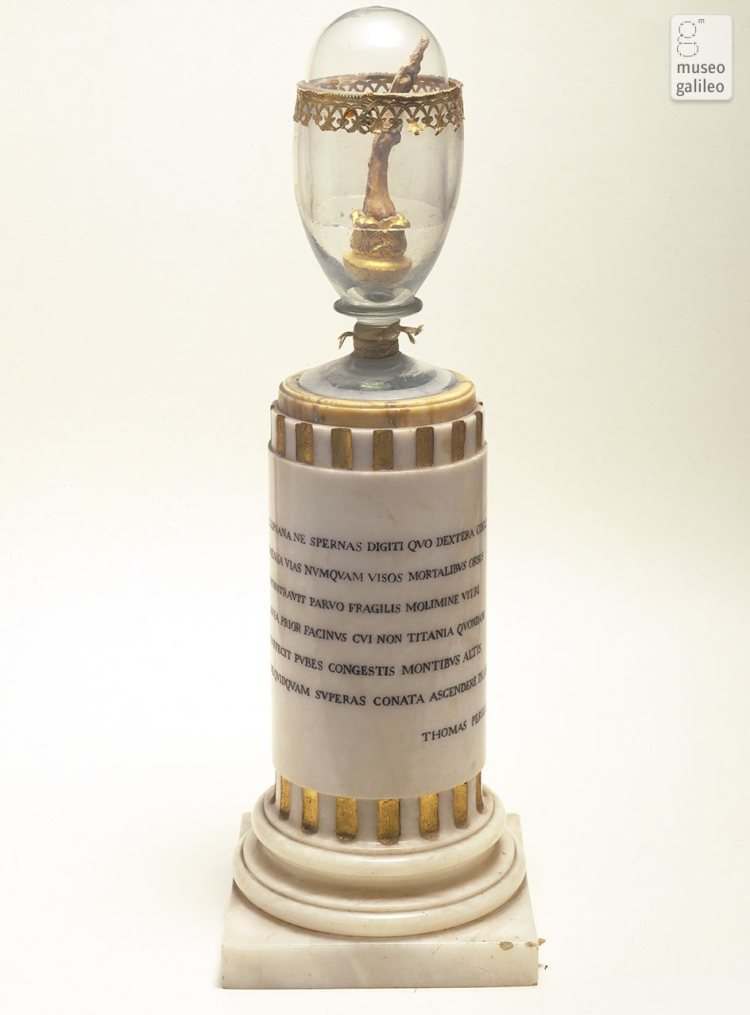
Middle finger of Galileo's right hand

This item exemplifies the celebration of Galileo as a hero and martyr of science. The finger was detached from the body by Anton Francesco Gori on March 12, 1737, when Galileo's remains were moved from the original grave to the monumental tomb built on the initiative of Vincenzo Viviani. 


Reliquary of Mary Magdalene

The relic, enclosed in rock crystal, is said to be Mary Magdalene's tooth.

So the mnemonic image is of the Young Man as a lovely Reliquary of Beauty filled with hot white seeds - semen. That reliquaries are used to contain Holy Fragments of a Saint after their death works well to underscore the urgency of passing on his beauty to future generations.


Notes 4/18/2017


Unthrifty loveliness, why dost thou spend
Upon thy self thy beauty's legacy?

Right off the bat, the distancing language of economy. The Young Man "loveliness" is unthrifty - echoing the "thriftless" praise from Son. 2. He is spending his seed unwisely, in an unfruitful manner, making investments - if any - that will not pay any dividend, have no return. And what is he spending his wealth - treasure - upon? Himself. Again, Narcissus. And the prurient image of the Young Man ejaculating upon himself, wasting his seed.

Nature's bequest gives nothing, but doth lend,
And being frank she lends to those are free:

Bequest reinforces the legacy, a will which stipulates how an individual's legacy is to be given to others. It's helpful here to imagine the Young Man as the Miser and Nature as the Generous Mother who gives generously but with certain conditions: that her gifts must be passed on to future generations after the death of the one given to, not hoarded and taken to the grave.

Then, beauteous niggard, why dost thou abuse
The bounteous largess given thee to give?

The overabundant Beauty of the Young Man was a bountiful gift given to him by Nature. Not to keep to himself and hoard, niggard, but to also give to others. The masturbatory undernotes resonate here in "abuse the bounteous largess." He isn't using his seed, he's abusing it - and himself - in selfish acts of Onanism. (Note: A gift that cannot be given away ceases to be a gift. The spirit of a gift is kept alive by its constant donation.  - Lewis Hyde)

Profitless usurer, why dost thou use
So great a sum of sums, yet canst not live?

The userer is always the image of the pawnshop owner for me, the rapacious one who preys on the hardships of others, taking in their property as collateral at a small fraction of its actual value and loaning them money at an exorbitant rate of interest. The Userer is always at the advantage, he always stands to make a profit. So if the Young Man is a profitless usurser, he has accepted something of great value without realizing it. He has in his possession great wealth - sum of sums - but is not able to survive - in himself and by extending his blood legacy.

For having traffic with thy self alone,
Thou of thy self thy sweet self dost deceive:

Contra Kerrigan and Pro Booth, I always see this line as referencing masturbation. Mnemonically, it fits with the visual of the Young Man spending his seed upon himself in Q1. He's not having sex with anyone. Also nuanced echo from Son. 2: "Or who is he so fond will be the tomb / Of his self-love, to stop posterity?" This self-eroticizing Narcissus, masturbating to the reflection of his own image in his mind or the mirror is betraying / deceiving this self - the Self that is contained in the shell of the body - by not insuring this it will survive beyond his individual ego-ic death.

Then how when nature calls thee to be gone,
What acceptable audit canst thou leave?

It's all about economics. About inheritance. What you have been given in your life, you are called upon to give to others so the gift will continue to have currency in the world. Note here again the figure of Mother Nature who loaned you - pawnshop usurer - your Beauty is now calling in that loan. That object of great wealth that you were keeping as collateral is now being asked to be returned. Mother Nature has the pawn ticket. What have you done with what she gave you to keep? Or extended, how have you invested the wealth which you inherited? How have you, fair creature, increased (Son. 1), the bounteous largess, the Beauty, that was given to you to give to others?

 Thy unused beauty must be tombed with thee,
   Which, used, lives th' executor to be.

The Reliquary full of seeds once bursting with life and Beauty, meant to be planted and cultivated, are now relegated to a sterile death in the Tomb. Your self and your Self shall die and leave no trace upon the ground. Your memory shall fade in the minds of men until you are Nothing.

Or, if used, planted and cultivated, those self-same seeds become the Executor of your Beauty's Estate, granting new bequests to new flesh and multiplying your beauty many fold.

The Executor wears the Face of Death because it is Death that calls us all to audit. Beauty is in a continual war with Death. Beauty makes the deepest impression upon Memory. What is most beautiful is most memorable.


SONNET INDEX


***

“You gave me hyacinths first a year ago;
“They called me the hyacinth girl.”
—Yet when we came back, late, from the Hyacinth garden,
Your arms full, and your hair wet, I could not
Speak, and my eyes failed, I was neither
Living nor dead, and I knew nothing,
Looking into the heart of light, the silence.
Oed’ und leer das Meer. 

- The Waste Land


https://en.wikipedia.org/wiki/Hyacinthoides_non-scripta


The Wild Hyacinth is in flower from early in April till the end of May, and being a perennial, and spreading rapidly, is found year after year in the same spot, forming a mass of rich colour in the woods where it grows. The long leaves remain above ground until late in the autumn. From the midst of very long, narrow leaves, rising from the small bulb and overtopping them, rises the flower-stem, bearing the pendulous 'bluebells' arranged in a long, curving line. Each flower has two small bracts at the base of the short flower-stalk of pedicel. The perianth (the term applied when the parts of the calyx and corolla are so similar in form and colour that no difference is perceptible) is bluish-purple and composed of six leaflets. The flowers have a slight, starch-like scent.

This is the 'fair-hair'd hyacinth' of Ben Jonson, a name alluding to the old myth, for tradition associates the flower with the Hyacinth of the Ancients, the flower of grief and mourning, so Linnaeus first called it Hyacinthus. Hyacinthus was a charming and handsome Spartan youth, loved by both Apollo and Zephyrus. Hyacinthus preferred the Sun-God to the God of the West, who sought to be revenged. One day, when Apollo was playing quoits with the youth, a quoit that he threw was blown by Zephyrus out of its proper course and it struck and killed Hyacinthus. Apollo, stricken with grief, raised from his blood a purple flower on which the letters 'ai, ai,' were traced, so that the cry of woe might for evermore have existence on the earth. As our English variety of Hyacinth had no trace of these mystic letters, our older botanists called it Hyacinthus nonscriptus, or 'not written on.' A later generic name, Agraphis, is of similar meaning, being a compound of two Greek words, meaning 'not to mark.'

http://www.botanical.com/botanical/mgmh/h/hyawil43.html


Monday, April 10, 2017

SONNET 3 GLASS: Look in thy glass and tell the face thou viewest


Magdalene with the Smoking Flame, Georges de La Tour, c. 1640,
Los Angeles County Museum of Art


Look in thy glass and tell the face thou viewest
Now is the time that face should form another;
Whose fresh repair if now thou not renewest,
Thou dost beguile the world, unbless some mother.
For where is she so fair whose uneared womb
Disdains the tillage of thy husbandry?
Or who is he so fond will be the tomb
Of his self-love, to stop posterity?
Thou art thy mother's glass and she in thee
Calls back the lovely April of her prime;
So thou through windows of thine age shalt see,
Despite of wrinkles, this thy golden time.
   But if thou live rememb'red not to be,
   Die single and thine image dies with thee.


SONNET INDEX


Mnemonic Image: GLASS (MIRROR)

Memory Passage: Beauty's ROSE in a World War I TRENCH is reflected in a GLASS

Idiosyncratic Abstract: God Lost in his own reflection has created a nightmare of a world

Couplet Imagery: The Young Man's face vanishing in the Mirror


Notes 4/10/2017


Looking to the couplet for mnemonic images:

Over the years, as The Young Man gazes lovingly upon his Beauty in the Mirror, he realizes he is gradually vanishing, becoming nothing.

The conversation for Narcissus. You imagine Echo watching her love waste away, enchanted by his own reflection whispering these words:

Look in thy glass and tell the face thou viewest

Note how the sense of otherness inhabits the "face thou viewest." Echo telling him: See your reflection as an unknown aspect of yourself, ask for its advice, listen to its response. Something of the Socratic Daemon here. The selfish Rhetoric. Tell your Shadow:

Now is the time that face should form another;

As if the Face of Beauty can be molded and shaped from clay or bodied forth in a creative act of imagining. A nuanced quality in the Young Man that he is not in control. Only under the influence of the Beauty that has enchanted him can he be urged to form another face. Tell that Shadow you love so much to create a duplicate, to replicate, to reproduce, to re-present. Much play with the signifier creating it's own sign.

Whose fresh repair if now thou not renewest,

Already there are signs of age, of blots on Beauty's face that needs be freshly repaired, restored to its primal splendor. But this is no cosmetic task to be covered on the surface. Merely painting over will not suffice. It must be a renewal of a face.

Thou dost beguile the world, unbless some mother.

To not renew and repair the Face of Beauty is to "beguile" the world. The semantic tone of beguile resonant with the image of a Beauty so beguiling and overflowing with superhuman abundance that should it ever look upon itself, it would become enchanted and lost within the infinite regression / multiplication of self-love. There is a God dreaming His own Beauty in the World and at that moment when he looks into a mirror, the God sees himself clearly, the God Who Is Dreaming the Dream. The whorls of the Golden Ration collapse inwards towards the Still Point, the interior of the Sea's Shell, the Rose, the Silence of Infinite Regression. Imagine the Tibetan Deity Avalokitesvara.


https://www.pinterest.com/LemurianGate/avalokitesvara/


https://www.pinterest.com/LemurianGate/avalokitesvara/


https://www.pinterest.com/jaymaynard562/tibetan-buddhist-thangkas/

https://tarnovel.wordpress.com/2015/09/29/the-infinite-regression-of-shaming/


https://www.pinterest.com/pin/138274651039898797/


At the still point of the turning world. Neither flesh nor fleshless;
Neither from nor towards; at the still point, there the dance is,
But neither arrest nor movement. And do not call it fixity,
Where past and future are gathered. Neither movement from nor towards,
Neither ascent nor decline. Except for the point, the still point,
There would be no dance, and there is only the dance. 


- T. S. Eliot


So Q1 sets the regressive scene of the Young Man gazing into his own Face in the Mirror. He sees those lines of life that need repair, but there is no repair or restoration that goes beyond the superficial and cosmetic. The repair that is required is a complete renewal, a recreation, to reproduce another face, "form another".

Otherwise, and here enters, once again, the World of Judgement and Duty, if you do not form another, you shall beguile the world in the manner you have been beguiled. You shall un-bless - as if the blessing where already a given - some woman who was fated / destined / chosen to be the mother of your beauty, the soil in which your seed is to planted, nurtured, and from which the reproduction of your Beauty will be born.

Casting aside all sexist cavils, the duty of the Young Man to plant his seed is also the duty of the Woman to receive it. And where is that woman whose Beauty surpasses that of the Young Man's, who is she that would not desire your seed to be implanted in her womb, that rich and fertile virgin soil that should delight to newly tilled and deeply plowed by one so Beautiful as you, her husband?

For where is she so fair whose uneared womb
Disdains the tillage of thy husbandry?

More importantly, (because one imagines there would have been a multitude of fair and willing uneared wombs desirous of the Young Man's tillage and husbandry), is to ask what sort of creature is so in love with himself, so selfish and miserly with his Beauty, that he would rather die than replicate himself?

Or who is he so fond will be the tomb
Of his self-love, to stop posterity? 

Look at your own lovely Mother. You are her reflection in the Flesh. When she looks at you in the mirror, she remembers the joy of her own youthful beauteous prime. The Young Man's face is that of a beautiful woman in the Springtime prime of her life. Magnetic across genders, beyond male or female.

Thou art thy mother's glass and she in thee
Calls back the lovely April of her prime;

And in that same manner that you are the mirror image of her Beautiful Prime, so your reproductions will be mirrors to you. Instead of being enchanted by the Mirror and your own reflected self which will soon ripen and decay, the years will become as magic windows where you can see your reflection born anew through your own reproductions.

So thou through windows of thine age shalt see,
Despite of wrinkles, this thy golden time.

Return now to the couplet images:

Over the years, as The Young Man gazes lovingly upon his Beauty in the Mirror, he realizes he is gradually vanishing, becoming nothing.

Gaze on your reflection, Beauteous Youth, but remember everything is passing and transitory. The Beauty that you so love right now, kept unused, will vanish into Nothing. No one will remember you once you yourself have gone. So if this is your wish, to be erased from the Face of Time, do not reproduce your image. Insist upon singularity, even to the double in the mirror, turn away from any representation of your self and continue into your inward solipsism. Perhaps there is God Who is Dreaming the World within, awaiting the return of the One Who Choses Not Be Dreamed / Remembered.

But if thou live rememb'red not to be,
   Die single and thine image dies with thee.


The Mirrror which flattereh not.


Monday, April 3, 2017

SONNET 2 TRENCH: When forty Winters shall beseige thy brow

"The trench was a horrible sight. The dead were stretched out on one side, one on top of each other six feet high. I thought at the time I should never get the peculiar disgusting smell of the vapour of warm human blood heated by the sun out of my nostrils. I would rather have smelt gas a hundred times. I can never describe that faint sickening, horrible smell which several times nearly knocked me up altogether." - British Captain Leeham, talking about the first day of the Battle of the Somme


When forty Winters shall beseige thy brow,
And dig deep trenches in thy beauty's field,
Thy youth's proud livery, so gazed on now,
Will be a totter'd weed, of small worth held:
Then being asked where all thy beauty lies -
Where all the treasure of thy lusty days -
To say, within thine own deep-sunken eyes,
Were an all-eating shame and thriftless praise.
How much more praise deserved thy beauty's use,
If thou couldst answer, "This fair child of mine
Shall sum my count and make my old excuse" -
Proving his beauty by succession thine!
    This were to be new made when thou art old,
    And see thy blood warm when thou feel'st it cold.


SONNET INDEX


Mnemonic Image: TRENCH

Memory Passage: Beauty's ROSE in a World War I TRENCH

Idiosyncratic Abstract: The weathered and shivering Old Man, holding a handful of dried dusty rose petals, sees the fresh and flushed Young Child licking the dripping dew from a freshly cut red rose.

Couplet Images: An old and cold-blooded Weathered Wrinkled Man and a new and hot-blooded Fresh and Ruddy Faced Child.


NOTES 4/3/2017

Advancing the couplet as Key Mnemonic Images: An old and cold-blooded Weathered Wrinkled Man and a new and hot-blooded Fresh and Ruddy Faced Child.

This were to be new made when thou art old,
And see thy blood warm when thou feel'st it cold.

The Old Man, a ghost of former beauty, wrinkled and scarred by time, resembling Death, feels his own blood running cold over his bones, but sees it burning hot and new in the flesh his blood: his child.

This vicarious life. The Grandfather gazes upon the Grandson with quiet joy, indulges his enthusiasms, encourages his youthful dreams, sponsors his hope, while silently nursing his own regrets and despair. What hope remains is not enough to animate the tired vessel of his aching bones and wretched flesh; there is only hope for his blood within a younger form being full to the brim and not yet broken.

Kerrigan notes Richard II:

Hath love in thy old blood no living fire?  
Edward's seven sons, whereof thyself art one,  
Were as seven vials of his sacred blood

***

When forty Winters shall beseige thy brow, 
And dig deep trenches in thy beauty's field,
Thy youth's proud livery, so gazed on now, 
Will be a totter'd weed, of small worth held: 

The Mnemonic Image is of a World War I trench, the "horrible sight" piled with corpses, pooled with blood, the stench of decay and death impossible to escape.

Winters shall beseige. A War in the Sonnets is always being waged against the ravages of Time. After 40 years, Time will have dug deep trenches, wrinkles, lines of age, in the Young Man's face, beauty's field. Scars and creases of age, the soft smooth cheeks and brow of innocence now de-faced, Time's cruel knife having carved deep lines of experience, of daily worry, flesh sagging under the weight of remorse, guilt, shames and the million trivial betrayals of self. The fractures of broken dreams rising visible through the skin.

Booth indicates livery as a soldier's uniform. The fresh green soldier's uniform having been worn for 40 years, reeking of human sweat and tears, splattered with blood and human waste: the totter'd weed. This weed sadly remembers the Rose - what it once was and what it once hoped to be. The Garden has been turned into a Battlefield. Eden into a Waste Land.

And I will show you something different from either  
Your shadow at morning striding behind you  
Or your shadow at evening rising to meet you;  
I will show you fear in a handful of dust.

Fear in the face in the mirror.

Kerrigan point to The Rape of Lucrece:

Her mistress she doth give demure good-morrow,
With soft-slow tongue, true mark of modesty,
And sorts a sad look to her lady's sorrow,
For why her face wore sorrow's livery;
But durst not ask of her audaciously
Why her two suns were cloud-eclipsed so,

Nor why her fair cheeks over-wash'd with woe.

Q1 established the image of the war being waged upon Beauty's Field, the Young Man's face, and Q2 asks the question of After 40 Years...

Then being asked where all thy beauty lies - 
Where all the treasure of thy lusty days -
To say, within thine own deep-sunken eyes, 
Were an all-eating shame and thriftless praise.

The deep-sunken orbits of the eyeholes of the skull, the hollowed features of the onanist. The eyes which 40 years ago looked upon the Young Man's beauty (gazed on now), now hunger to gaze upon the treasure that must have been gained in those lusty days. Implicit questions of how did you use your beauty, your wealth, how did you spend the coin of your beauty when it was at it's greatest value?

Shakespeare's “obsessive concern with metaphorical wealth, profit, worth, value, expense, ‘content’” (Greene, “Pitiful Thrivers” 176) has of course been well-noted, as has his reliance on Erasmus's “Epistle to Persuade a Young Gentleman to Marriage” (Booth 135). Yet critics have not noted just how much Shakespeare “economizes” Erasmus's letter, which would have been widely available from Thomas Wilson's translation in The Arte of Rhetorique (1560). In this text, the speaker tries to convince a young man to marry and have children, and as one perhaps might expect from Erasmus, the primary impetus is religious: 

Matrimony is even as honorable as the name of a heretic is thought shameful. What is more right or meet than to give that unto the posterity, the which we have received of our ancestors? What is more inconsiderate than under the desire of holiness to eschew that as unholy which God himself, the fountain and father of all holiness, would have to be counted as most holy? (qtd. in Wilson, Arte 81)

Not marrying is clearly unnatural, but even this argument is enfolded within a religious context, and in an interesting analogy, Erasmus equates not marrying with acting “like giants,” that is to say, fighting nature is being “a rebel to God himself (86, 87). In Shakespeare's sequence, however, the primary referent shifts from religion to economics. The addressee is guilty of “niggarding” (1); his beauty deserves “use” and not procreating is “thriftless praise” (2); Nature “lends” beauty and the addressee is a “Profitless usurer” (4) who ought to fear Nature's “audit” (4). As Greene says, “The procreation sonnets display with particular brilliance Shakespeare's ability to manipulate words which in his language belonged both to the economic and the sexual/ biological semantic fields: among others, ‘increase,’ ‘use,’ ‘spend,’ ‘free,’ ‘live,’ ‘dear,’ ‘house,’ ‘usury,’ ‘endowed,’ along with their cognates” (“ Pitiful Thrivers” 176). 

- Shakespeare's Sonnets: Critical Essays - What's the Use? 
Or, The Problematic of Economy in Shakespeare's Procreation Sonnets by Peter C. Herman

To say, within thine own deep-sunken eyes, 
Were an all-eating shame and thriftless praise.

Note the resonance with the previous sonnet's images of eyes and eating,

But thou contracted to thine own bright eyes,
Feed'st thy light's flame with self-substantial fuel,

and

Pity the world, or else this glutton be,

   To eat the world's due, by the grave and thee.

Shame at how you have spent your beauty and what you now have to show for it. Conversely, praise at how thrifty you have saved your beauty, treasure, and how it more than adequately accounts for your years, sums your accounts, as expressed in Q3.

How much more praise deserved thy beauty's use,
If thou couldst answer, "This fair child of mine
Shall sum my count and make my old excuse" -
Proving his beauty by succession thine!

As with most of Shakespeare, there are levels of interpretation working simultaneously. For the purposes of memorization, the sexual, as graphic as possible, is helpful as an initial repository of mnemonic images. Because there is depth here, much substance to the matter, the sexual fades over repeated recitations into the background of the sonnet.

You imagine the Young Man full of lust and spending his seed fruitlessly in acts of masturbation - perhaps even in recreational acts of homosexuality that will bear no fruit. After forty years, the Young Man is now hollow-eyed after such feeding upon himself, his face lined with Time's trenches. And not one cares to gaze upon it in a sexual manner. Then being asked about how his seed / semen / treasure was used in the world, to say it was only spend upon himself or on his clothes or covers or down a drain, is to then know what Shame is, how it, and not Lust, now feeds upon the Old Man. The Old Blood no longer has any fuel for Living Fires of lust to burn upon, only burned out coal and ash for the red flames of Shame to dance upon. But if the Old Man could point to his fresh and hot-blooded child as evidence of the good use, investment, of his seed / semen / treasure, then he is not bankrupt and the child as his fruit / profit / beauty stand in his stead as evidence for the beauty he once had.

Notes 4/10/2017

Will and the Young Man, similarly attired, again in the room with the table, two chairs, window to the Garden.

Upon the table is

a Crystal Ball
the Mirror of Narcissus

Will, playing the Magus, bids the Young Man to peer into the depth of the Crystal Ball, which is sitting on top of the Mirror of Narcissus.

When forty Winters shall beseige thy brow,

The Young Man sees the ragged skeletal hand of Winter raking over his face creating bloody wounds which instantly turn to livid scars, again and again, forty winters, lines of woe and worry deepening with each passing iteration.

And dig deep trenches in thy beauty's field,

The Young Man's beautiful face is become a battlefield. Pits and Trenches line deepen. Scars of violence inflicted from the outside. Suffering has hollowed his features from within,

Thy youth's proud livery, so gazed on now,

The Young Man sees himself in the Crystal Ball as a handsome fresh faced soldier at the height of summer climbing down a ladder into one of these Trenches, all the other soldiers are looking at him with envy, jealously and lust. His uniform is spotless and tight against his muscular form.

Will be a totter'd weed, of small worth held:

Then, the Young Man sees in the Crystal Ball the ragged creature of himself struggling to climb out of a trench in the cold of Winter, his face is pockmarked and creased with age, covered with dirt and grime. Behind him a group of Young Vital Soldiers mock his feeble efforts to climb up and out. Many turn their eyes away from the forlorn sight. His uniform is now filthy, like that of a beggar, torn and worn thin, covered in blood, sweat, tears, dried semen and shit, barely hanging on to the skeletal form within.

Then being asked where all thy beauty lies -

Once he is out of the Trench, a shivering pitiful Old Man, there stands before him a Tribunal composed of his family, friends and lost loves. As a group, they ask what happened to his Beauty.

Where all the treasure of thy lusty days -

A beautiful naked woman emerges from the Tribunal and mocks his impotence, points out all the the semen stains on his ragged uniform, shaming him to the others.

To say, within thine own deep-sunken eyes,

The Young Man sees forty years of flash images of every time he masturbated, semen shot onto clothes, sheets, walls, down drains, millions of seeds spilled onto fallow ground. With every ejaculation, his face hollows, the orbits of his eyes darken with rings, the skull emerges with a grim smile.

Were an all-eating shame and thriftless praise.

His gluttony for self-love judged through the eyes of the Tribunal turn to Shame, which is a slavering slovenly fanged Beast, head down, shuffling sideways to escape view, tail between its legs. This Beast of Shame begins to gnaw with toothless jaw upon his flesh.

More naked beautiful women emerge from the Tribunal, each of them a woman he has rejected. They all lay down in a circle around him, spreading their legs open wide. An accountant that looks like the Grim Reaper is compiling a tally of all the wasted semen, shaking his head at the enormous amount of treasure that was wasted. The Young Man realizes he has been wasting the great treasure of his semen upon self-love, he has been hoarding his Beauty, been a miser with his treasure / seed.

How much more praise deserved thy beauty's use,
If thou couldst answer,

The circle of naked women stare at the Young Man with relentless seduction. And while his spirit is still willing, his flesh is week. He is old and impotent. The Beast of Shame licks at his impotent cock and his empty balls. The woman all swell into pregnancy and out from between their legs, an infant crawls out of each one, a beautiful mirror image of the Young Man.

"This fair child of mine
Shall sum my count and make my old excuse" -

The Grim Accountant indicates each child as wise investment that has paid high dividends. The Beast of Shame vasnishes. The Young Man sees in each beautiful child that his deposit of seed into fertile soil has been cultivated into a tree that has borne much fruit. His beauty has not only been added to, but multiplied.

Proving his beauty by succession thine!

The Young Man now sees himself as the Old Man surrounded by his children.

 This were to be new made when thou art old,

Each of the children is illuminated from within by the burning image of the Red Rose, dripping with fresh dew, while he holds in his cold heart only memories, a dusty pile of cold dried petals.

And see thy blood warm when thou feel'st it cold.


SONNET INDEX

Saturday, December 19, 2015

POESIS 41: O Fortuna from the Carmina Burana


O Fortuna
velut luna
statu variabilis,
semper crescis
aut decrescis;
vita detestabilis
nunc obdurat
et tunc curat
ludo mentis aciem,
egestatem,
potestatem
dissolvit ut glaciem.

Sors immanis
et inanis,
rota tu volubilis,
status malus,
vana salus
semper dissolubilis,
obumbrata
et velata
michi quoque niteris;
nunc per ludum
dorsum nudum
fero tui sceleris.

Sors salutis
et virtutis
michi nunc contraria,
est affectus
et defectus
semper in angaria.
Hac in hora
sine mora
corde pulsum tangite;
quod per sortem
sternit fortem,
mecum omnes plangite!

O Fortune,
like the moon
you are changeable,
ever waxing
and waning;
hateful life
first oppresses
and then soothes
as fancy takes it;
poverty
and power
it melts them like ice.

Fate – monstrous
and empty,
you whirling wheel,
you are malevolent,
well-being is vain
and always fades to nothing,
shadowed
and veiled
you plague me too;
now through the game
I bring my bare back
to your villainy.

Fate is against me
in health
and virtue,
driven on
and weighted down,
always enslaved.
So at this hour
without delay
pluck the vibrating strings;
since Fate
strikes down the strong man,
everyone weep with me!


19 December 2015 - Returning to O Fortuna after an absence, working with the poem while on the treadmill at the Y. Could not nail down the first stanza. Kept jumbling up. But Baudelaire's L'Albatross went well as did an initial read through of Harmonie du Soir. Although I did have some issues with Lorca's Pequeño vals Vienés. I do not typically switch back and forth. And I had also run through Estuans inters on an initial read through. So there may have been some overlapping of association. However, I generally don't have as much trouble on pieces that I have previously committed to memory, such as O Fortuna.

After having listened to it in performance and reciting for Medieval Latin pronunciation, it seems fine. In fact, my heightened state of attentiveness to it, along with listening to it being performed by someone else. appears to have engraved it ever deeper into my memory.

I often imagine what it is like to lose your memory. In fact, I am quite paranoid about it. The jumbling up of simple phrases, the holes where you feel something should be, the attempts to fill those hole with another phrase that you know is not right. All extremely disconcerting.

It is worth adding that after months and months of immersion into the Sonnets, the return to non-Shakespearian poetry - especially to non-iambic pentameter - is jarring at times, the prosody feels alien and clumsy, and I it takes me a little longer to find the rhythm, meter.

Currently, I work on non-Shakespearian pieces for about 45 minutes before switching to the Sonnets. The jarring effect works both ways. It takes a few beats to get back in line. Or lines to get back into the beat. The stronger the meter, there reality identifiable, the better in each case. For example, moving from Sonnet 73 in iambic pentameter to Poe's The Raven in trochaic octameter is an easy transition. It is also easy to glide in the Alexandrine lines of Baudelaire's L'Albatross. However, moving suddenly into the fractured fugue of Celan's Todesfuge is jarring and difficult. The music of poetry becomes as shattered glass. And the mind has to fight to commit these images and this language to memory.


Wednesday, December 2, 2015

Sonnet 73: Ruined Choir


That time of year thou may'st in me behold
When yellow leaves, or none, or few, do hang
Upon those boughs which shake against the cold,
Bare ruin'd choirs, where late the sweet birds sang.
In me thou see'st the twilight of such day,
As after sunset fadeth in the west,
Which by-and-by black night doth take away,
Death's second self, that seals up all in rest.
In me thou see'st the glowing of such fire
That on the ashes of his youth doth lie,
As the death-bed whereon it must expire
Consum'd with that which it was nourish'd by.
   This thou perceivest, which makes thy love more strong,
   To love that well which thou must leave ere long.


Memory work first thing in the morning is always best. Before the internal music and dialogue of the mind gets too complicated. In fact, the more out of sorts I am in the mornings, my head still filled with the stuff of dreams, the stronger the memorization seems to be.

It is best to have three or four sonnets to focus on. My usual practice is to work on one primarily - and this is important with regard to memory - then to sort of casually move through the others. For example, this morning I am working on the sequence from 70 to 73 - with focus on 73 in particular. What happens is this:

There is a quick mumbling out loud read-through scan of the four sonnets 70 to 73.
I note strong imagery in each:
Sonnet 70: A crow that flies in Heaven's sweetest air: Crow
This imagistic line will most likely be the index image that marks the poem. So early on I am searching for that strong image that will stand out.
Sonnet 71: From this vile world with vilest worms to dwell: Worms
Sonnet 72: My name be buried where my body is: Buried Name
Sonnet 73: Bare ruined choirs where late the sweet birds sang: Choirs or
In me thou see'st the twilight of such day: Twilight - notable for being the only instance of that word in all the sonnets

There typically will be one that is a favorite, more preferred: Sonnet 73.

After reading through the others out loud, I slow down to listen to the language of 73. Here I try to puzzle out the sequence of dramatic images and begin to get inside the sonnet. Access to the interior architecture of the sonnets takes time and often it is only after having completely learned it by heart that I can begin to understand it's interior meaning.

So for now what I am interested in are the memorable elements that immediately strike out at me. With assistance Booth and Paterson, I can break the quatrains into mapping images:

Q1: Tree

When yellow leaves, or none, or few, do hang
Upon those boughs which shake

Q2: Day

Twilight of such day

Q3: Fire

There is also movement

from year to day to immediate temporality

That time of year / twilight of such day / glowing of such fire

from cold to hot: 

shake against the cold / glowing of such fire

from light to dark: 

behold when yellow leaves /
thou sees the twilight /
as after sunset /
black night doth take it away /

So with these mapping images in place, I work out the essential narrative:

Shakespeare tells the Young Man in three different ways that he is getting older, many believe the yellow leaves, or none, or few do hang are coded reference to his baldness. It makes no difference if this is true or not, it is a strong image to hold on to. So he's getting old and decrepit, hair falling out, his arms like old tree limbs shaking against ruined choirs in ruined cathedrals where there is only a distant memory of birdsong.

He says he is so old that he is like the twilight, which is after the sun has set below that horizon, and that the figure of black night as Death's second self is sealing up everything. There is a striking image of stitching up the eyes of the dead that is resonate.

He says he is so used up, he as a fading fire that is burning on the ashes of his former, youthful self and these ashes [empty memories] are the only fuel left to feed this flame. There is no more substantial fuel and the fire is consuming itself. [ Direst echo back to the first Sonnet. ]

Since the Young Man can see all of this and still continue to love such a balding, decrepit, blackened, and used up near dead creature indicates the Young Man's love must be strong and true.

So now I have a sense of the story of the sonnet and I start to actually memorize.

At this point it is helpful to take notice of repetition of word and phrase, meter and rhyme.

I take it a Quatrain at a time.

That time of year thou mayest in me behold

I know what the sonnet is about and can safely imagine a bleak winter as the time of year. Then I imagine this winter personified as an old man. This Old Man is beaten down with age almost equivalent with a personification of Death, something out of a Holbein print: skeletal thin, flesh hanging from his bones, scraps of hair upon his skin covered skull.

When yellow leaves, or none, or few, do hang

and since these lines are enjambed, I include the next two in my imagining:

Upon those boughs which shake against the cold
Bare ruined choirs where late the sweet birds sang.

I see the Old Man Shakespeare as a skeletal tree with arms for tree limbs. There is a shifting image here of the yellow autumnal leaves, now shivering on the limbs, now the limbs are bare, actually, just a few leaves remain. The tree stands in a ruined Cathedral in a bleak twilight winterscape, next to it are the remains of a ruined wooden choir, empty bird's nest visible. The cold wind shakes the branches against the choir. I can hear the rattling sound and there is the nostalgia for the song of the absent birds and, layered underneath, the singing of the choirboys when in bygone days before the Cathedral was ruined and the god departed the world.

In me thou see'st the twilight of such day, 
As after sunset fadeth in the west,  

I take note that that Q2 begins as a variation of the the first line of Q1: me thou sees / year thou mayest. Also, knowing it's a rare word in Shakespeare, I make special note of Twilight. Above the the tree with a few yellow leaves next to the ruined choir haunted with absent birdsong, it is Twilight. I can hear the poet taking a breath and speaking with a voice full of resignation. Shakespeare knows he looks the end of a long day. There is not golden sunset on his features. He is beyond that. The sun no longer shines for him. It has set below the horizon.

Which by-and-by black night doth take away,
Death's second self, that seals up all in rest. 

Black night and Death are waiting, seeping into the world like ink into water, eclipsing all light. The image of Black Night as Death walking slowly along, sealing the tombs with darkness, stitching up the eyes of those in sleep. Resonance with Sleep as the Brother of Death.

In me thou see'st the glowing of such fire 
That on the ashes of his youth doth lie

Q3 follows the same first line pattern, repetition as incantation, of Q2: In me thous seest. The final image of Shakespeare as the used up Old Man is the self-consuming fire. Reference back to Sonnet 1. The image is not of a burning fire throwing off light and energy, but of one that has died down to a glow, all of the wood burned to ash. I see here a few pulsing red coals on a bed of ash. Those last breaths of life.

As the death-bed whereon it must expire 
Consum'd with that which it was nourish'd by. 

The Pulse of the fire, that low glowing flame aura, barely hovering over the ashes, on the utmost point of going out.

   This thou perceivest, which makes thy love more strong,
   To love that well which thou must leave ere long.

And now, I see Shakespeare and the Young Man in some tavern, sitting across from each other at a table. Shakespeare with tired resigned eyes. However, the Young Man still looks upon him with love and passion. Shakespeare says, after all of this I have shown you: the balding, skeletal, blackened and used up creature, after all of this,  if you still love me, then your love must be strong. Especially to love this thing that you know will not be here very much longer.


Sunday, November 29, 2015

This forgetting is our curse


As I lay in bed earlier, I considered the distance between thought and action, whether that action be creative expression or just cleaning the apartment. At times, it seems a chasm. And the undone actions gather an almost romantic anxiety around them. They become distant and forbidding peaks of mountains ever out there on the horizon. Cloud capped castles of an opium laced dream. And I am left here in my sweat soaked bed impotent to take even the first step towards them. 

I think of Colin Wilson's Mind Parasites. What was and is still a revelation to me about that book was the day to day truth of its central conceit: that there is a parasite feeding off out our vital energies. I feel this. Of course, I feel it as an aspect of human nature and not an alien being attempting to domesticate and harvest our energies for their own use. But in my moments of paralyzed lassitude, of black depression, even the most mundane of actions seems a Herculean - better not to do it all. 

However, the instant I take action, a clarity comes over me and I see how I had been making mountains of molehills, how I had lost perspective, making fundamental errors in reasoning. The question - which I believe is at its heart a religious question - is how to keep the hold on perspective. 

This forgetting is our curse, the essence of our tragic condition.

Don't--don't hang back with the Brutes!


The apartment that where I am living is an apparent chaos of books, open boxes, papers, stacks of files and hundreds of antique shaving mugs. By these last - an inheritance of sorts - I make my livelihood. As I thread the path through it to the kitchen, I wonder if this also is a sign of the sickness, this certain disorder in my dress? A cluttered room of memory that would scandalize Simonides.

As I am heating the milk and honey, I consider that Simonides was right there in my back pocket. That's got to be a good sign. I smile at the irony that one devoted to memory practices attributed to the wily Greek might forget that name. And for the millionth time, wonder about the metaphysical mystery of Shakespeare's Young Man. That the Sonnets have, as Shakespeare himself
predicted time and time again, endured through hundreds of years as a testimony to the Young Man's beauty, but his name and identity have not.

Watched Tennessee Williams' / Kazan's Streetcar Named Desire last night. Williams is always entertaining and quotable but oddly opaque, as if the innermost watchsprings of his characters are a mystery also to him. Like Tarantino, he writes great dialogue, but to what end? It seems enough that Stanley Kowalski and Blanche Dubois are classic American archetypes, wound up to spin around the drama. But I wonder about this winding: MacGuffins stand there where primal totem poles should be, not to be questioned and existing only to power the plot along in the most entertaining way. That being said, I enjoyed the film immensely.

"Maybe we are a long way from being made in God's image, but Stella--my sister--there has been some progress since then! Such things as art--as poetry and music--such kinds of new light have come into the world since then! In some kinds of people tenderer feelings have had some little beginning! That we have got to make grow! And cling to, and hold as our flag! In this dark march toward whatever it is we're approaching. . . . Don't--don't hang back with the Brutes!"

It is just after midnight


I wake up after only a few hours of sleep. The dream is trembling there, just on the edge of being forgotten. If I keep my consciousness as still as possible, it seems as if I might be able to recollect it. I am in the middle of a room with millions of spider web threads, each connected to me. The slightest movement, difference will sever them. The intentionality of my awareness is the focused energy of a lighthouse. I try to keep it as dim as possible, but it burns through the gossamer threads of the dream, vaporizing them instantly in the light. I lay on the bed staring at nothing, the dream utterly dissipated. As it is with every other thought these days, I wonder if I am losing my mind.

I recall the first Sonnet. Recite it in lazy silence to myself, starting fast.

From fairest creatures we desire increase
That thereby Memory's Rose might never die
But as the riper should by time decease
His tender heir might bear his living...

And here I realize I've made an error. How many thousands and thousands of times have I recited Sonnet 1? Without every making that error? Beauty's Rose. Beauty's Rose. So that they quatrain finishes with "bear his living memory." That odd rhymed coupling of "never die" and "Memory." How could I forget? It is a synchdoche for the entire Sonnet sequence, a self-evident axiom, as impossible to forget as 2+2 = 4.

The dread thoughts of sickness and disease step from the shadows like a host of cartoon wolves, jackals, hyenas, snakes, foul worms and maggots. All have been down there in the rag and bone shop of my mind, gorging upon the memories that make up my mind. The totems of the Sonnets, ritually placed around the clearing of my being, have served their purpose. Like watchmen on the towers or canaries in the coal mines, by their alert and alteration, diminishment or decay, I know the Memory Worms have now arrived, those eggs of disease have now hatched and the maggots are voraciously feasting upon the essence of all that I am.

I return to the presence of Sonnet 1 and recite that entirety without error. With a sign of slight relief, as that relief one feels after checking that the doors are locked on a dark night, I rise from the bed to begin my day. It is just after midnight.